<?xml version="1.0" encoding="utf-8"?><feed xmlns="http://www.w3.org/2005/Atom" ><generator uri="https://jekyllrb.com/" version="3.10.0">Jekyll</generator><link href="https://ronin4n6labs.github.io/feed.xml" rel="self" type="application/atom+xml" /><link href="https://ronin4n6labs.github.io/" rel="alternate" type="text/html" /><updated>2026-05-30T17:50:59+00:00</updated><id>https://ronin4n6labs.github.io/feed.xml</id><title type="html">Ronin4n6Labs Research Platform: Advancing Digital &amp;amp; Multimedia Forensics</title><subtitle>Independent (Ronin) Digital &amp; Multimedia Forensic Researcher&apos;s Notebook &amp; Thoughts</subtitle><entry><title type="html">New White Paper: Machine Learning as Forensic Evidence in Court</title><link href="https://ronin4n6labs.github.io/ml-as-forensic-evidence-for-court/" rel="alternate" type="text/html" title="New White Paper: Machine Learning as Forensic Evidence in Court" /><published>2026-05-30T00:00:00+00:00</published><updated>2026-05-30T00:00:00+00:00</updated><id>https://ronin4n6labs.github.io/ml-as-forensic-evidence-for-court</id><content type="html" xml:base="https://ronin4n6labs.github.io/ml-as-forensic-evidence-for-court/"><![CDATA[<p>Today I released the latest white paper in the <em>Forensic Machine Learning Framework</em> (FMLF) series:<br />
<strong><em>Machine Learning as Forensic Evidence in Court.</em></strong></p>

<p>This study addresses a rapidly emerging issue in digital and multimedia forensics: the increasing use of machine‑learning affected evidence in legal proceedings, often without disclosure, documentation, or the scientific foundations required for reliable interpretation. While ML components now appear across audio, image, video, and digital forensic tools, courts and practitioners rarely receive the information needed to evaluate how these systems operate or how they may influence evidentiary outcomes.</p>

<p>This white paper examines two domains of publicly available information: (1) the limited set of judicial opinions involving ML‑affected evidence, and (2) cross‑domain ML footprints in forensic tools and forensic‑adjacent tools based solely on vendor documentation. These findings are evaluated against established scientific and legal frameworks, including ISO/IEC 17025, NAS (2009), PCAST (2016), Federal Rule of Evidence 702, Daubert, Frye, and the doctrinal analysis of Grimm et al. (2021).</p>

<p>Across all domains, the study identifies consistent structural deficiencies: lack of transparency regarding ML involvement, absence of forensic‑specific validation or error‑rate data, no traceability of ML processing steps, and no reproducibility guarantees. The analysis shows that current ML‑affected evidence does <strong>not</strong> meet the scientific or legal expectations required for admissible forensic use.</p>

<p>The full paper is publicly available on OSF under a CC‑BY 4.0 license:</p>

<p><strong>DOI:</strong> https://doi.org/10.17605/OSF.IO/Z5TEG</p>

<p>This release expands the foundational layer of the Forensic Machine Learning Framework, following earlier white papers on AI‑generated audio and video detection. Upcoming work in the series will include the Forensic ML Requirements Analysis study, beginning with neural‑network feasibility testing against the Framework’s five scientific‑legal pillars, as well as additional exploratory and validation studies across multimedia domains. More to come soon.</p>]]></content><author><name></name></author><category term="research" /><category term="forensic-ml" /><category term="white-papers" /><summary type="html"><![CDATA[Today I released the latest white paper in the Forensic Machine Learning Framework (FMLF) series: Machine Learning as Forensic Evidence in Court. This study addresses a rapidly emerging issue in digital and multimedia forensics: the increasing use of machine‑learning affected evidence in legal proceedings, often without disclosure, documentation, or the scientific foundations required for reliable interpretation. While ML components now appear across audio, image, video, and digital forensic tools, courts and practitioners rarely receive the information needed to evaluate how these systems operate or how they may influence evidentiary outcomes. This white paper examines two domains of publicly available information: (1) the limited set of judicial opinions involving ML‑affected evidence, and (2) cross‑domain ML footprints in forensic tools and forensic‑adjacent tools based solely on vendor documentation. These findings are evaluated against established scientific and legal frameworks, including ISO/IEC 17025, NAS (2009), PCAST (2016), Federal Rule of Evidence 702, Daubert, Frye, and the doctrinal analysis of Grimm et al. (2021). Across all domains, the study identifies consistent structural deficiencies: lack of transparency regarding ML involvement, absence of forensic‑specific validation or error‑rate data, no traceability of ML processing steps, and no reproducibility guarantees. The analysis shows that current ML‑affected evidence does not meet the scientific or legal expectations required for admissible forensic use. The full paper is publicly available on OSF under a CC‑BY 4.0 license: DOI: https://doi.org/10.17605/OSF.IO/Z5TEG This release expands the foundational layer of the Forensic Machine Learning Framework, following earlier white papers on AI‑generated audio and video detection. Upcoming work in the series will include the Forensic ML Requirements Analysis study, beginning with neural‑network feasibility testing against the Framework’s five scientific‑legal pillars, as well as additional exploratory and validation studies across multimedia domains. More to come soon.]]></summary></entry><entry><title type="html">New White Paper: Scientific Foundation Gap Analysis for AI‑Generated Video Detection</title><link href="https://ronin4n6labs.github.io/ai-video-detection-gap-analysis/" rel="alternate" type="text/html" title="New White Paper: Scientific Foundation Gap Analysis for AI‑Generated Video Detection" /><published>2026-04-18T00:00:00+00:00</published><updated>2026-04-18T00:00:00+00:00</updated><id>https://ronin4n6labs.github.io/ai-video-detection-gap-analysis</id><content type="html" xml:base="https://ronin4n6labs.github.io/ai-video-detection-gap-analysis/"><![CDATA[<p>Today marks the release of the second white paper in the <em>Forensic Machine Learning Framework</em> (FMLF) series:<br />
<strong><em>Scientific Foundation Gap Analysis: Evaluating AI/ML‑Based Detection Methods for AI‑Generated Video in Forensic Science and Legal Contexts.</em></strong></p>

<p>This paper examines a rapidly evolving challenge in digital and multimedia forensics: whether today’s AI/ML systems that claim to detect AI‑generated or manipulated video are scientifically reliable enough for use in investigative or legal settings. While research in this area is expanding quickly, most published work emphasizes benchmark performance or model‑specific improvements rather than the forensic expectations of transparency, reproducibility, documented error rates, and validated decision criteria.</p>

<p>This white paper applies methodological principles drawn from the NIST Scientific Foundation Review (SFR) framework to evaluate representative categories of video‑detection methods, including spatial‑artifact detectors, temporal‑consistency approaches, multimodal and hybrid pipelines, model‑specific fingerprinting techniques, and benchmark‑driven evaluations. The findings show that current approaches do <strong>not</strong> yet meet the standards required for forensic use, and the paper identifies the scientific gaps that must be addressed before these tools can be responsibly deployed.</p>

<p>The full paper is publicly available on OSF under a CC‑BY 4.0 license:</p>

<p><strong>DOI:</strong> https://doi.org/10.17605/OSF.IO/R987T</p>

<p>This release continues the broader series of scientific‑foundation documents focused on forensic machine learning, following the earlier white paper on AI‑generated audio detection. Upcoming work in the series will address video ground‑truth methods, declared‑decoder workflows, and validation frameworks for multimedia evidence. More to come soon.</p>]]></content><author><name></name></author><category term="research" /><category term="forensic-ml" /><category term="white-papers" /><summary type="html"><![CDATA[Today marks the release of the second white paper in the Forensic Machine Learning Framework (FMLF) series: Scientific Foundation Gap Analysis: Evaluating AI/ML‑Based Detection Methods for AI‑Generated Video in Forensic Science and Legal Contexts.]]></summary></entry><entry><title type="html">Beyond the Button, The Next Steps: When Validation Becomes Empirical</title><link href="https://ronin4n6labs.github.io/beyond-the-button-method-validation-Gap_vs_Explore/" rel="alternate" type="text/html" title="Beyond the Button, The Next Steps: When Validation Becomes Empirical" /><published>2026-04-16T09:00:00+00:00</published><updated>2026-04-16T09:00:00+00:00</updated><id>https://ronin4n6labs.github.io/beyond-the-button-method-validation-Gap_vs_Explore</id><content type="html" xml:base="https://ronin4n6labs.github.io/beyond-the-button-method-validation-Gap_vs_Explore/"><![CDATA[<p>In my 2026 <em>Journal of Forensic Sciences</em> (JFS) paper, <em>A research‑focused framework for empirical method validation in digital and multimedia evidence</em>, I outlined a structured pathway for developing and validating novel forensic methods. The early stages of that framework—<strong>feasibility studies and scientific foundation gap analyses</strong>—were designed to help researchers move beyond tool‑centric habits and into the scientific discipline that courts and standards bodies now expect.</p>

<p>Recently, during a discussion about my long‑term Forensic Machine Learning (ML) Framework project, someone asked a deceptively simple question:</p>

<p><strong>“What is the real difference between an exploratory study and a gap analysis?”</strong></p>

<p>The question is timely. As machine learning accelerates into forensic practice, the distinctions between feasibility studies, gap analyses, and exploratory studies are becoming increasingly important. These study types serve different scientific purposes, answer different questions, and occupy different positions in the validation framework. Treating them as interchangeable undermines both scientific rigor and legal defensibility.</p>

<p>This post revisits the structure I published in my 2026 JFS paper and expands it to clarify how these study types function within the validation framework—especially for novel method development such as forensic ML. In particular, I explain why <strong>exploratory studies</strong> have become an essential third category for emerging domains where the scientific and legal foundations are not yet established.</p>

<hr />

<h1 id="1-where-these-study-types-fit-in-the-validation-framework"><strong>1. Where These Study Types Fit in the Validation Framework</strong></h1>

<p>In my validation‑study framework, the early stages of novel method development fall into three categories:</p>

<ul>
  <li><strong>Feasibility Study</strong></li>
  <li><strong>Scientific Foundation Gap Analysis</strong></li>
  <li><strong>Scientific Foundation Exploratory Study</strong></li>
</ul>

<p>These stages are not interchangeable.<br />
They build on each other in a forensic‑driven sequence.</p>

<p>A feasibility study asks whether a scenario, signal, or mechanism is scientifically plausible and worth investigating.</p>
<blockquote>
  <p><strong>Feasibility → discovery</strong></p>
</blockquote>

<p>A scientific foundation gap analysis examines what the literature, current practice, and existing protocols provide—and identifies what is missing relative to forensic requirements.</p>
<blockquote>
  <p><strong>Scientific Foundation Gap Analysis → identify what is missing</strong></p>
</blockquote>

<p>A scientific foundation exploratory study then defines the scientific, legal, and operational foundations of the domain so that a forensic‑grade method or protocol can be developed.</p>
<blockquote>
  <p><strong>Scientific Foundation Exploratory Study → define the domain</strong></p>
</blockquote>

<p>This structure was present in my 2026 JFS paper, but the role of exploratory studies—especially for emerging domains like forensic ML—deserves clearer articulation. In practice, exploratory studies often arise only after a feasibility study and a gap analysis reveal that the domain itself must be defined before validation can occur.</p>

<hr />

<h1 id="2-what-a-feasibility-study-really-is"><strong>2. What a Feasibility Study Really Is</strong></h1>

<p>A <strong>feasibility study</strong> is the earliest, lowest‑stakes scientific activity.<br />
It is not forensic.<br />
It is not evidentiary.<br />
It is not admissibility‑focused.</p>

<p>Its purpose is simple:</p>

<blockquote>
  <p><strong>Determine whether a concept, signal, or mechanism appears to exist and is worth further scientific investigation.</strong></p>
</blockquote>

<p>A feasibility study:</p>

<ul>
  <li>explores whether a measurable effect exists</li>
  <li>uses small datasets or controlled conditions</li>
  <li>does not attempt to generalize</li>
  <li>does not evaluate forensic requirements</li>
  <li>does not claim operational readiness</li>
</ul>

<p>In ML, feasibility studies often look like:</p>

<ul>
  <li>“Can a model distinguish real vs. synthetic audio under ideal conditions?”</li>
  <li>“Is there a detectable artifact in diffusion‑model images?”</li>
  <li>“Does a classifier show promise on a narrow, controlled dataset?”</li>
</ul>

<p>Feasibility studies are <strong>discovery‑oriented</strong>, not evaluative.</p>

<hr />

<h1 id="3-what-a-scientific-foundation-gap-analysis-is"><strong>3. What a Scientific Foundation Gap Analysis Is</strong></h1>

<p>A <strong>Scientific Foundation Gap Analysis (SFGA)</strong> plays a very specific role in the early stages of novel method development. In my workflow, a gap analysis is only appropriate <strong>after</strong> feasibility is established and <strong>before</strong> an exploratory study is undertaken.</p>

<p>Its purpose is:</p>

<blockquote>
  <p><strong>Identify what is missing between current practice and the forensic requirements that would apply to the scenario or method under consideration.</strong></p>
</blockquote>

<p>A gap analysis is not about defining the domain.<br />
It is about determining whether the existing scientific, operational, or legal foundations are sufficient—and if not, where the deficiencies lie.</p>

<p>A scientific foundation gap analysis:</p>

<ul>
  <li>examines what the literature, standards, and existing protocols currently provide</li>
  <li>maps <strong>claims → requirements → evidence → gaps</strong></li>
  <li>evaluates whether current methods or assumptions satisfy forensic requirements</li>
  <li>identifies missing validation, missing transparency, and missing error‑rate characterization</li>
  <li>highlights risks to admissibility, reliability, and due process</li>
  <li>is inherently forensic in nature, because it is grounded in forensic requirements</li>
</ul>

<p>In my own work, this step often reveals that the <strong>domain itself is not yet defined</strong>.<br />
For example, when evaluating whether existing digital and multimedia forensic methods could support an investigation into an ML‑driven incident (such as a hypothetical lunar‑lander failure), the gap analysis showed:</p>

<ul>
  <li>no public ML‑forensic investigative protocol exists</li>
  <li>existing DME methods do not address ML decision pathways</li>
  <li>Based on publicly available sources, NASA’s current documentation does not describe ML‑specific, forensic‑ready incident investigation procedures for spacecraft systems; existing materials focus on general mishap investigation, software assurance, and AI risk management rather than forensic reconstruction of ML decision pathways.</li>
  <li>forensic requirements cannot be met with current tools or workflows</li>
</ul>

<p>That is the gap.</p>

<p>Gap analyses are <strong>evaluative</strong>, not exploratory.<br />
They tell us <strong>what is missing</strong>, not <strong>what the domain should be</strong>.</p>

<p>Once the gaps are identified, the next step is the <strong>Scientific Foundation Exploratory Study</strong>, which defines the domain and articulates the scientific and legal foundations needed to build a forensic‑grade method or protocol.</p>

<hr />

<h1 id="4-why-exploratory-studies-are-needed-in-forensic-ml"><strong>4. Why Exploratory Studies Are Needed in Forensic ML</strong></h1>

<p>In traditional forensic disciplines, the scientific foundations already exist.<br />
In machine learning, they often do not. This becomes clear only after feasibility and a scientific foundation gap analysis reveal that the domain itself is undefined.</p>

<p>This is where <strong>Scientific Foundation Exploratory Studies (SFES)</strong> become essential.</p>

<p>An exploratory study is appropriate when:</p>

<ul>
  <li>a feasibility study shows the scenario is scientifically plausible</li>
  <li>a gap analysis reveals that existing methods, standards, or protocols cannot meet forensic requirements</li>
  <li>the domain lacks established forensic requirements or investigative frameworks</li>
  <li>the scientific, legal, and operational foundations must be articulated before a method can be built</li>
</ul>

<p>Its purpose is:</p>

<blockquote>
  <p><strong>Define, characterize, and articulate the scientific, legal, and operational foundations of a domain so that a forensic‑grade method or protocol can be developed.</strong></p>
</blockquote>

<p>A scientific foundation exploratory study:</p>

<ul>
  <li>defines the domain and its boundaries</li>
  <li>identifies the scientific principles relevant to forensic use</li>
  <li>maps legal, evidentiary, and due‑process constraints</li>
  <li>explores operational contexts and investigative pathways</li>
  <li>articulates what “forensic‑grade” would require in this domain</li>
  <li>establishes the foundations needed for future validation studies</li>
</ul>

<p>Exploratory studies are <strong>foundational</strong>, not evaluative.<br />
They do not test tools or claims.<br />
They <strong>build the domain</strong> that future forensic methods must inhabit.</p>

<p>This is why two of my current Forensic ML Framework papers—<br />
<strong>(1) Legal Requirements for Forensic ML</strong> and<br />
<strong>(2) Investigative‑Only ML Use by Law Enforcement</strong>—are not gap analyses. They are exploratory studies.</p>

<p>The gap analyses revealed that:</p>

<ul>
  <li>no forensic ML investigative protocols exist</li>
  <li>existing digital and multimedia forensic methods do not address ML decision pathways</li>
  <li>Publicly available documentation from agencies such as NASA, NTSB, and DoD does not appear to include ML‑specific, forensic‑ready incident investigation procedures; existing materials focus on general mishap investigation, safety analysis, and cybersecurity rather than forensic reconstruction of ML decision pathways.</li>
  <li>forensic requirements cannot be met with current tools or workflows</li>
</ul>

<p>The exploratory studies then take the next step:<br />
<strong>defining the scientific and legal architecture needed to build a forensic ML investigative method or protocol.</strong></p>

<p>In other words:</p>

<ul>
  <li><strong>Gap Analysis → identifies what is missing</strong></li>
  <li><strong>Exploratory Study → defines what must exist</strong></li>
</ul>

<p>This is the role exploratory studies play in novel forensic method development—and why they are indispensable for emerging domains where the scientific foundations do not yet exist.</p>

<hr />

<h1 id="5-how-these-three-study-types-work-together-in-novel-ml-method-development"><strong>5. How These Three Study Types Work Together in Novel ML Method Development</strong></h1>

<p>Here is the sequence as it actually functions in my validation‑study framework and in my own research workflow:</p>

<h3 id="step-1--feasibility-study"><strong>Step 1 — Feasibility Study</strong></h3>
<p>“Is this scenario, signal, or mechanism scientifically plausible and worth studying?”</p>

<p>A feasibility study answers the “What if?” question.<br />
If the answer is yes, the work moves forward.</p>

<hr />

<h3 id="step-2--scientific-foundation-gap-analysis"><strong>Step 2 — Scientific Foundation Gap Analysis</strong></h3>
<p>“What is missing between current practice and the forensic requirements that would apply?”</p>

<p>Once feasibility is established, the next step is to examine:</p>

<ul>
  <li>what the literature provides</li>
  <li>what current forensic methods claim</li>
  <li>what agencies or standards bodies have in place</li>
  <li>what forensic requirements would apply</li>
  <li>where the deficiencies are</li>
</ul>

<p>The gap analysis identifies <strong>what we do not have</strong>.</p>

<hr />

<h3 id="step-3--scientific-foundation-exploratory-study"><strong>Step 3 — Scientific Foundation Exploratory Study</strong></h3>
<p>“What scientific, legal, and operational foundations must be defined so a forensic‑grade method or protocol can be developed?”</p>

<p>Only after the gaps are identified does it become clear that:</p>

<ul>
  <li>the domain itself may not be defined</li>
  <li>forensic requirements may not yet exist</li>
  <li>operational pathways may be unclear</li>
  <li>legal constraints may be unarticulated</li>
</ul>

<p>The exploratory study defines the domain so that a forensic‑grade method can be built.</p>

<hr />

<h3 id="step-4--method-foundations-analysis-operational-exploratory-phase"><strong>Step 4 — Method Foundations Analysis (Operational Exploratory Phase)</strong></h3>

<p>Once a Scientific Foundation Exploratory Study (SFES) defines the domain, the next step is to <strong>operationalize</strong> that domain so that a forensic‑grade method or protocol can eventually be built and validated. This is the role of <strong>Method Foundations Analysis</strong>, which functions as an <strong>Operational Exploratory Phase</strong>.</p>

<p>This phase is not validation.<br />
It is not performance testing.<br />
It is not claim evaluation.</p>

<p>Its purpose is:</p>

<blockquote>
  <p><strong>Translate the conceptual foundations defined in the exploratory study into operational dimensions, investigative pathways, and failure‑mode structures that a future forensic method must be able to handle.</strong></p>
</blockquote>

<p>In other words, if the exploratory study defines <em>what the domain is</em>, Method Foundations Analysis defines <em>how the domain behaves</em> under conditions relevant to forensic investigation.</p>

<p>Method Foundations Analysis:</p>

<ul>
  <li>identifies the operational conditions under which the system behaves predictably or unpredictably</li>
  <li>examines boundary conditions, edge cases, and assumption violations</li>
  <li>characterizes how the system responds to perturbations, drift, or degraded inputs</li>
  <li>explores adversarial, stress, or anomalous scenarios relevant to forensic use</li>
  <li>maps decision‑path structures and reconstructability requirements</li>
  <li>identifies what artifacts must be preserved for forensic reconstruction</li>
  <li>determines what must be observable, measurable, or capturable for a future method to be viable</li>
</ul>

<p>This phase is <strong>not</strong> about testing a tool or model.<br />
It is about understanding the <strong>behavioral space</strong> that a forensic method must eventually inhabit.</p>

<p>Method Foundations Analysis is where the domain becomes operational:</p>

<ul>
  <li>the boundaries become testable</li>
  <li>the assumptions become explicit</li>
  <li>the failure modes become visible</li>
  <li>the forensic requirements become concrete</li>
  <li>the investigative pathways become structured</li>
</ul>

<p>This phase is essential because forensic methods cannot be built on conceptual definitions alone. They require an understanding of <strong>how the system behaves under conditions relevant to forensic investigation</strong>, including conditions that are rare, degraded, adversarial, or unexpected.</p>

<p>In the Forensic ML Framework, Method Foundations Analysis is the bridge between:</p>

<ul>
  <li><strong>Step 3 — defining the domain</strong>, and</li>
  <li><strong>Step 5 — building a forensic‑grade method or protocol</strong></li>
</ul>

<p>It ensures that when a method is eventually constructed, it is grounded in:</p>

<ul>
  <li>the scientific foundations (Step 3)</li>
  <li>the operational realities (Step 4)</li>
  <li>and the forensic requirements identified earlier (Step 2)</li>
</ul>

<p>Without this phase, method development risks being built on assumptions rather than evidence, and validation risks being built on performance rather than forensic reconstructability.</p>

<hr />

<h1 id="6-why-the-distinction-matters"><strong>6. Why the Distinction Matters</strong></h1>

<p>Because each study type answers a different question:</p>

<ul>
  <li><strong>Feasibility</strong> → Is this scenario scientifically plausible and worth studying?</li>
  <li><strong>Scientific Foundation Gap Analysis</strong> → What is missing between current practice and the forensic requirements that would apply?</li>
  <li><strong>Scientific Foundation Exploratory Study</strong> → What scientific, legal, and operational foundations must be defined so a forensic‑grade method or protocol can be built?</li>
</ul>

<p>If we collapse these categories:</p>

<ul>
  <li>feasibility studies get mistaken for validation</li>
  <li>gap analyses get performed without requirements</li>
  <li>exploratory studies get mistaken for operational guidance</li>
  <li>ML tools get misrepresented as “forensic‑ready”</li>
  <li>courts receive misleading or incomplete scientific claims</li>
</ul>

<p>Clear distinctions protect:</p>

<ul>
  <li>scientific integrity</li>
  <li>legal reliability</li>
  <li>due process</li>
  <li>the credibility of forensic ML as a discipline</li>
</ul>

<hr />

<h1 id="7-closing-building-the-scientific-foundations-for-forensic-ml"><strong>7. Closing: Building the Scientific Foundations for Forensic ML</strong></h1>

<p>The forensic community is entering a period where ML tools are advancing faster than the scientific foundations needed to evaluate them. This makes it essential to distinguish:</p>

<ul>
  <li><strong>discovery</strong> (feasibility)</li>
  <li><strong>evaluation</strong> (gap analysis)</li>
  <li><strong>foundation‑building</strong> (exploratory study)</li>
</ul>

<p>By clarifying these study types—and using them intentionally—we can build forensic‑grade ML methods that are scientifically defensible, legally sound, and operationally meaningful.</p>

<hr />

<h2 id="references"><strong>References</strong></h2>

<p>Wales, G. S. (2026). <em>A research‑focused framework for empirical method validation in digital and multimedia evidence</em>. <em>Journal of Forensic Sciences</em>, 00, 1–14. <code class="language-plaintext highlighter-rouge">https://doi.org/10.1111/1556-4029.70253</code></p>]]></content><author><name></name></author><category term="method-validation" /><summary type="html"><![CDATA[In my 2026 Journal of Forensic Sciences (JFS) paper, A research‑focused framework for empirical method validation in digital and multimedia evidence, I outlined a structured pathway for developing and validating novel forensic methods. The early stages of that framework—feasibility studies and scientific foundation gap analyses—were designed to help researchers move beyond tool‑centric habits and into the scientific discipline that courts and standards bodies now expect.]]></summary></entry><entry><title type="html">New White Paper: Scientific Foundation Gap Analysis for AI‑Generated Audio Detection</title><link href="https://ronin4n6labs.github.io/ai-audio-detection-gap-analysis/" rel="alternate" type="text/html" title="New White Paper: Scientific Foundation Gap Analysis for AI‑Generated Audio Detection" /><published>2026-03-21T00:00:00+00:00</published><updated>2026-03-21T00:00:00+00:00</updated><id>https://ronin4n6labs.github.io/ai-audio-detection-gap-analysis</id><content type="html" xml:base="https://ronin4n6labs.github.io/ai-audio-detection-gap-analysis/"><![CDATA[<p>Today marks the release of the first white paper in the <em>Forensic Machine Learning Framework</em> (FMLF) series:<br />
<strong><em>Scientific Foundation Gap Analysis: Evaluating AI/ML‑Based Detection Methods for AI‑Generated Audio in Forensic Science and Legal Contexts.</em></strong></p>

<p>This paper examines a rapidly growing problem in digital and multimedia forensics: whether today’s AI/ML systems that claim to detect AI‑generated audio are scientifically reliable enough for use in investigative or legal settings. While research in this area is expanding quickly, most published work focuses on incremental model performance rather than the forensic expectations of transparency, reproducibility, documented error rates, and validated decision criteria.</p>

<p>This white paper applies methodological principles drawn from the NIST Scientific Foundation Review (SFR) framework to evaluate representative categories of detection methods, including deep‑learning models, hybrid pipelines, explainability techniques, and benchmark evaluations. The findings show that current approaches do <strong>not</strong> yet meet the standards required for forensic use, and the paper identifies the scientific gaps that must be addressed before these tools can be responsibly deployed.</p>

<p>The full paper is publicly available on OSF under a CC‑BY 4.0 license:</p>

<p><strong>DOI:</strong> https://doi.org/10.17605/OSF.IO/WBEPC</p>

<p>This release also marks the beginning of a broader series of scientific‑foundation documents focused on forensic machine learning, including upcoming work on video ground‑truth methods, declared‑decoder workflows, and validation frameworks for multimedia evidence. More to come soon.</p>]]></content><author><name></name></author><category term="research" /><category term="forensic-ml" /><category term="white-papers" /><summary type="html"><![CDATA[Today marks the release of the first white paper in the Forensic Machine Learning Framework (FMLF) series: Scientific Foundation Gap Analysis: Evaluating AI/ML‑Based Detection Methods for AI‑Generated Audio in Forensic Science and Legal Contexts.]]></summary></entry><entry><title type="html">Beyond the Button, The Next Steps: When Validation Becomes Empirical</title><link href="https://ronin4n6labs.github.io/beyond-the-button-method-validation-3-and-4/" rel="alternate" type="text/html" title="Beyond the Button, The Next Steps: When Validation Becomes Empirical" /><published>2026-03-16T09:00:00+00:00</published><updated>2026-03-16T09:00:00+00:00</updated><id>https://ronin4n6labs.github.io/beyond-the-button-method-validation-3-and-4</id><content type="html" xml:base="https://ronin4n6labs.github.io/beyond-the-button-method-validation-3-and-4/"><![CDATA[<h2 id="beyond-the-button-the-next-steps-when-validation-becomes-empirical"><strong>Beyond the Button, The Next Steps: When Validation Becomes Empirical</strong></h2>

<p>Steps 1 and 2 established the foundation: define the method, map what is known, and expose what is missing. Those steps are conceptual by design. They force clarity, but they don’t yet touch data unless you have to do an exploratory study because the method is novel. They don’t quantify anything. They don’t tell you whether the method will survive contact with empirical reality.</p>

<p><strong>Steps 3, 4, and 5 are where that changes.</strong><br />
This is the point where validation stops being a planning exercise and becomes a scientific one.</p>

<p>These steps—<strong>Statistical Planning &amp; Dataset Development</strong>, <strong>Pilot Study &amp; Measurement Instrument Development</strong>, and <strong>Community Introduction of the Method</strong>—form the empirical hinge of the entire framework. They determine whether the validation will be statistically defensible, operationally realistic, and legally credible under FRE 702 and Daubert [1, 2].</p>

<hr />

<h2 id="step-3-statistical-planning-and-dataset-development"><strong>Step 3: Statistical Planning and Dataset Development</strong></h2>

<p>Before a single file is processed or a single metric is calculated, you must answer a harder question: <strong>What data, and how much of it, do we need to make defensible claims about this method?</strong></p>

<p>This is the point where validation shifts from conceptual planning to empirical design. And if you have not already articulated your <strong>research questions</strong> and <strong>testing hypotheses</strong>, this is where they become essential. They define what you are trying to measure, why you are measuring it, and what outcomes would support or contradict the method’s intended purpose.</p>

<h3 id="why-research-questions-matter-here"><strong>Why research questions matter here</strong></h3>

<p>A research question anchors the entire validation study. It forces you to articulate the central claim the method must answer. Without it, dataset design becomes guesswork, and statistical planning becomes arbitrary. The research question determines what data you need, what conditions must be represented, what metrics matter, and what constitutes success or failure.</p>

<hr />

<blockquote>
  <h4 id="forensic-research-example-scenario--developing-a-research-question"><strong>Forensic Research Example Scenario — Developing a Research Question</strong></h4>
  <p>We want to determine whether audio transcoded from an M4A file (Advanced Audio Coding, AAC) into a linear Pulse Code Modulation (PCM) WAV file <strong>accurately represents the original AAC audio stream</strong>, without introducing measurable deviations beyond what the AAC codec itself imposes.</p>

  <h4 id="research-question"><strong>Research Question</strong></h4>
  <p><strong>Does transcoding an AAC (M4A) audio file into a PCM WAV file preserve the original AAC audio content within acceptable forensic tolerances, without introducing additional artifacts or measurable deviations beyond codec‑expected behavior?</strong></p>

  <p><strong><em>Researcher &amp; Practitioner Note:</em></strong><br />
Although this is a simple research scenario, it reflects a real operational requirement. Many forensic labs routinely transcode audio during intake, processing, or reporting. Ensuring that this workflow preserves content integrity is not only a research exercise, it can also serve as an internal <strong>method verification</strong> activity required under accreditation frameworks such as <strong>ISO/IEC 17025:2017</strong>, which obligates laboratories to verify that validated methods perform as intended when implemented on their own systems (§7.2.1.5). This type of study helps labs demonstrate that their transcoding processes are reliable, reproducible, and suitable for forensic casework and courtroom defensibility.</p>
</blockquote>

<hr />

<h3 id="why-hypotheses-matter-here"><strong>Why hypotheses matter here</strong></h3>

<p>The testing hypothesis defines <em>how</em> you will evaluate the method and <em>what standard</em> the method must meet to be considered scientifically or forensically acceptable. In multimedia forensics, a <strong>binomial hypothesis structure</strong> is often the most transparent and defensible because it frames performance in terms of two competing explanations tied directly to measurable outcomes.</p>

<ul>
  <li><strong>Null hypothesis (H₀)</strong> — The method fails to meet the minimum acceptable performance threshold for forensic use.</li>
  <li><strong>Alternative hypothesis (Hₐ)</strong> — The method meets or exceeds the minimum acceptable performance threshold.</li>
</ul>

<p>This structure forces you to pre‑specify what “acceptable performance” means (e.g., sensitivity ≥ 0.85), which prevents circular reasoning and aligns with the expectations of <strong>FRE 702</strong> and <strong>Daubert</strong>, both of which require testability, known error rates, and transparent criteria for evaluating scientific reliability.</p>

<p>In forensic science, this approach also supports accreditation requirements such as <strong>ISO/IEC 17025:2017</strong>, which obligates laboratories to define acceptance criteria, evaluate method performance, and demonstrate that methods are fit for their intended purpose before use in casework.</p>

<hr />

<blockquote>
  <h4 id="continuing-scenario--hypotheses-for-the-aacpcm-transcoding-study"><strong>Continuing Scenario — Hypotheses for the AAC→PCM Transcoding Study</strong></h4>
  <p>The testing hypothesis defines how we will evaluate whether AAC→PCM transcoding preserves the original audio content. Because our measurement instruments are <strong>*Pearson Correlation Coefficient (PCC)</strong>, <strong>Mean Quadratic Difference (MQD)</strong>, and <strong>Long-Term Average Sorted Spectrum (LTASS)</strong>, the hypotheses must be expressed in terms of these quantitative metrics.</p>

  <p><strong>Null Hypothesis (H₀)</strong><br />
The AAC→PCM transcoding process does <em>not</em> preserve the audio content within acceptable forensic tolerances when evaluated using PCC, MQD, and LTASS.<br />
Formally: at least one metric falls <strong>below</strong> its minimum acceptable threshold (e.g., PCC too low, MQD too high, LTASS deviation too large).</p>

  <p><strong>Alternative Hypothesis (Hₐ)</strong><br />
The AAC→PCM transcoding process <em>does</em> preserve the audio content within acceptable forensic tolerances when evaluated using PCC, MQD, and LTASS.<br />
Formally: all metrics meet or <strong>exceed</strong> their minimum acceptable thresholds.</p>

  <p>This structure forces us to define explicit, measurable acceptance criteria for each metric (e.g., <strong>PCC ≥ 0.95</strong>, <strong>MQD ≤ 200</strong>, <strong>LTASS deviation ≤ 2 dB</strong>). It also aligns with the expectations of <strong>FRE 702</strong> and <strong>Daubert</strong>, which require testability, known error rates, and transparent evaluation criteria.</p>

  <p><strong><em>Researcher &amp; Practitioner Note:</em></strong><br />
Because PCC, MQD, and LTASS are quantitative and reproducible, they are well‑suited for both <strong>method validation</strong> (developing a new forensic measurement procedure) and <strong>method verification</strong> under <strong>ISO/IEC 17025:2017 §7.2.1.5</strong>, where labs must confirm that validated methods perform correctly on their own systems. This makes the hypothesis structure directly applicable to both research and operational forensic workflows.</p>
</blockquote>

<hr />

<h3 id="why-this-belongs-in-step-3"><strong>Why this belongs in Step 3</strong></h3>

<p>Statistical planning cannot occur in a vacuum. Power analysis, sample size determination, dataset composition, and simulation‑based planning all depend on:</p>

<ul>
  <li>what question you are answering</li>
  <li>what hypothesis you are testing</li>
  <li>what effect size or threshold matters</li>
  <li>what error rates are acceptable</li>
  <li>what variables influence the outcome</li>
</ul>

<p>Without these elements, you cannot justify your sample size, your dataset design, or your statistical assumptions. With them, Step 3 becomes a disciplined, transparent, and scientifically grounded process—one that produces validation results that are reproducible, interpretable, and legally defensible.</p>

<p>A critical part of Step 3 is identifying <strong>all variables that may influence the method’s performance</strong>. In multimedia forensics, these include codec settings, device characteristics, sampling rates, bitrates, file containers, processing workflows, and environmental factors. If these variables are not explicitly defined and controlled, the study cannot produce meaningful or defensible error‑rate estimates.</p>

<p>This is where forensic science diverges sharply from tool testing. Tool tests often rely on convenience samples, vendor‑provided datasets, or whatever happens to be available. <strong>Method validation cannot.</strong> Courts expect empirical rigor, known error rates, and transparent statistical justification. Accreditation frameworks such as <strong>ISO/IEC 17025:2017</strong> reinforce this expectation by requiring laboratories to validate or verify methods (§7.2.1) and to ensure the ongoing validity of results (§7.7). That process begins with Step 3.</p>

<hr />

<blockquote>
  <h3 id="continuing-scenario--variables-for-the-aacpcm-transcoding-study"><strong>Continuing Scenario — Variables for the AAC→PCM Transcoding Study</strong></h3>
  <p>To plan our statistics and sampling in Step 3, we must identify the variables that can influence whether AAC→PCM transcoding appears to preserve the original audio content when measured with <strong>PCC</strong>, <strong>MQD</strong>, and <strong>LTASS</strong>.</p>

  <h4 id="independent-variables-factors-we-deliberately-vary"><strong>Independent Variables (factors we deliberately vary)</strong></h4>
  <ul>
    <li><strong>Codec bitrate:</strong> e.g., 64, 96, 128, 192, 256 kbps AAC</li>
    <li><strong>Codec profile/implementation:</strong> e.g., AAC-LC vs HE-AAC; different encoders/decoders</li>
    <li><strong>Content type:</strong> e.g., clean speech, conversational speech, music, mixed content</li>
    <li><strong>Sampling rate:</strong> e.g., 44.1 kHz vs 48 kHz</li>
    <li><strong>Transcoding workflow:</strong> e.g., Tool A vs Tool B; command-line vs GUI export; different settings</li>
  </ul>

  <h4 id="dependent-variables-what-we-measure"><strong>Dependent Variables (what we measure)</strong></h4>
  <ul>
    <li><strong>PCC:</strong> Pearson Correlation Coefficient between original and AAC→PCM waveforms</li>
    <li><strong>MQD:</strong> Mean Quadratic Difference between original and AAC→PCM waveforms</li>
    <li><strong>LTASS deviation:</strong> Band-by-band dB differences between original and AAC→PCM Long-Term Average Speech Spectrum</li>
  </ul>

  <h4 id="controlled-variables-held-constant-for-a-given-study-design"><strong>Controlled Variables (held constant for a given study design)</strong></h4>
  <ul>
    <li><strong>Recording environment:</strong> same room, microphone, and setup for source recordings</li>
    <li><strong>Original file format:</strong> uncompressed PCM WAV with fixed bit depth (e.g., 16‑bit)</li>
    <li><strong>Channel configuration:</strong> mono vs stereo (fixed per condition)</li>
    <li><strong>Processing chain:</strong> no additional filtering, enhancement, or level changes beyond the defined transcoding step</li>
    <li><strong>Measurement implementation:</strong> same scripts, same parameter settings, same analysis version</li>
  </ul>

  <h4 id="nuisance--contextual-variables-must-be-monitored-or-documented"><strong>Nuisance / Contextual Variables (must be monitored or documented)</strong></h4>
  <ul>
    <li><strong>Device-specific behavior:</strong> differences between capture devices or operating systems</li>
    <li><strong>Software versions:</strong> encoder/decoder and transcoding tool versions</li>
    <li><strong>Level normalization:</strong> any automatic gain control or loudness normalization</li>
    <li><strong>File container behavior:</strong> M4A vs other containers that might wrap AAC differently</li>
  </ul>

  <p><strong><em>Researcher &amp; Practitioner Note:</em></strong><br />
Explicitly identifying these variables is not academic busywork—it is the foundation for defensible sampling and power analysis. Under <strong>ISO/IEC 17025:2017</strong>, laboratories must demonstrate that their methods are fit for purpose and that results remain valid over time. If key variables are left undefined or uncontrolled, error‑rate estimates and acceptance thresholds for PCC, MQD, and LTASS cannot be trusted in casework or court.</p>

  <p><strong>Ground Truth in This Study</strong><br />
In this validation scenario, “ground truth” refers to the original uncompressed PCM WAV recordings that we create and control. These files exist <em>before</em> any AAC encoding. We then encode them to AAC (M4A) and transcode back to PCM. All measurements (PCC, MQD, LTASS) are computed between the original PCM (ground truth) and the AAC→PCM PCM (test item).</p>

  <p>In real casework, the original PCM may not be available, so true ground truth is often unknown. The purpose of this study is to characterize how a known AAC→PCM workflow behaves when ground truth <em>is</em> available, so that its behavior can be interpreted more cautiously when only derived files are present in casework.</p>

  <h4 id="casework-exemplar-note--using-controlchain-testing-when-ground-truth-is-unknown"><strong>Casework Exemplar Note — Using Control‑Chain Testing When Ground Truth Is Unknown</strong></h4>
  <p>In real forensic casework, the original uncompressed PCM recording is often unavailable, which means true <em>signal‑level ground truth</em> cannot be recovered. To address this, we use <strong>exemplar‑based modeling</strong> through a <strong>control‑chain test</strong>.</p>

  <p>In this approach, we construct a controlled reference chain that mirrors the <em>hypothesized</em> provenance of the case file:</p>
  <ol>
    <li>Create or select a clean PCM WAV recording with similar characteristics (content type, sampling rate, bit depth).</li>
    <li>Encode it to AAC using the same or best‑estimated <strong>codec profile, bitrate, and encoder implementation</strong>.</li>
    <li>Decode or transcode it back to PCM WAV using the <strong>same transcoding software, decoder implementation, version, operating system, and settings</strong> believed to have produced the case file.</li>
  </ol>

  <p>These elements—encoder, decoder, software, versions, and settings—correspond directly to the <strong>independent</strong> and <strong>nuisance/contextual variables</strong> defined in this study and are explicitly documented in the control‑chain test.</p>

  <p>We then measure PCC, MQD, and LTASS between the exemplar PCM (reference) and the exemplar AAC→PCM (test item). This produces a <strong>scientific model of expected distortions</strong> for that specific encoding/decoding chain, under those specific implementations and settings.</p>

  <p>This method does <em>not</em> reconstruct the original audio in the case file, nor does it provide literal ground truth. Instead, it offers a <strong>rigorous empirical framework</strong> for evaluating whether the distortions observed in the case file are:</p>
  <ul>
    <li>consistent with the hypothesized AAC→PCM workflow (including encoder, decoder, and software), or</li>
    <li>larger, smaller, or qualitatively different than expected.</li>
  </ul>

  <p>Exemplar‑based control‑chain testing is widely accepted in forensic audio because it provides a transparent, reproducible, and scientifically defensible basis for interpreting codec‑related artifacts when the true original signal is unavailable.</p>
</blockquote>

<hr />

<h3 id="power-isnt-optional"><strong>Power Isn’t Optional</strong></h3>

<p>A validation study must be designed with enough statistical power to detect meaningful effects in sensitivity, specificity, and error rates. In the JFS paper on this framework [7], this means:</p>

<ul>
  <li>targeting <strong>≥95% power</strong> for core diagnostic metrics</li>
  <li>using <strong>Monte Carlo simulation</strong> or <strong>bootstrapping</strong> to model variability and uncertainty</li>
  <li>avoiding pre‑targeted error rates that bias the study</li>
</ul>

<p>Power analysis addresses the <strong>probability</strong> of detecting a meaningful effect. It answers the question: <em>Given the effect size that matters, what is the probability that our study will detect a failure if one exists?</em> This is where we determine the sample size needed to detect unacceptable deviations in PCC, MQD, or LTASS with high confidence.</p>

<hr />

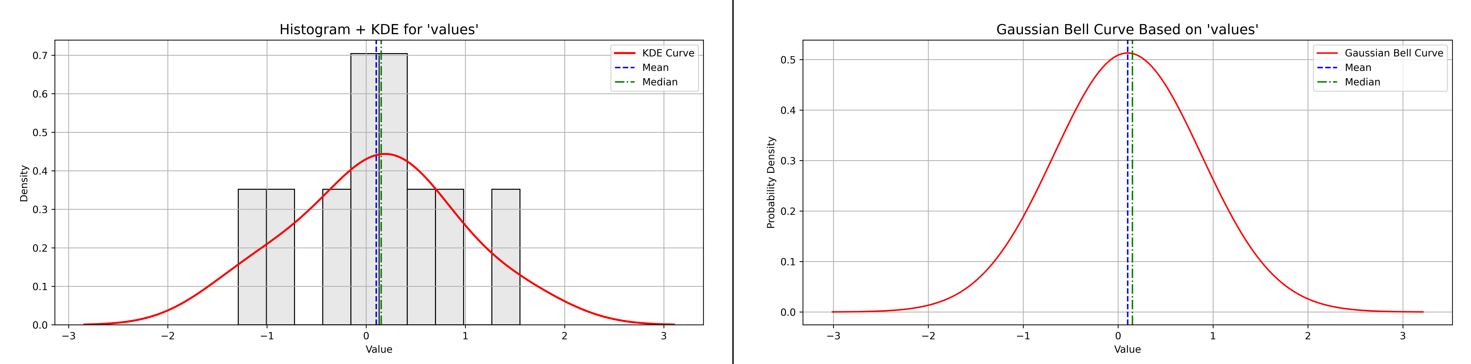
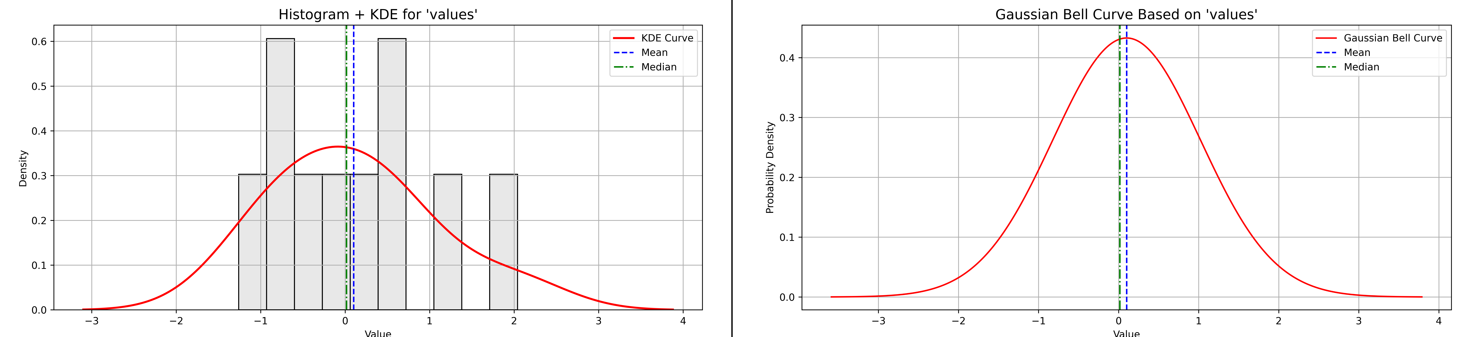
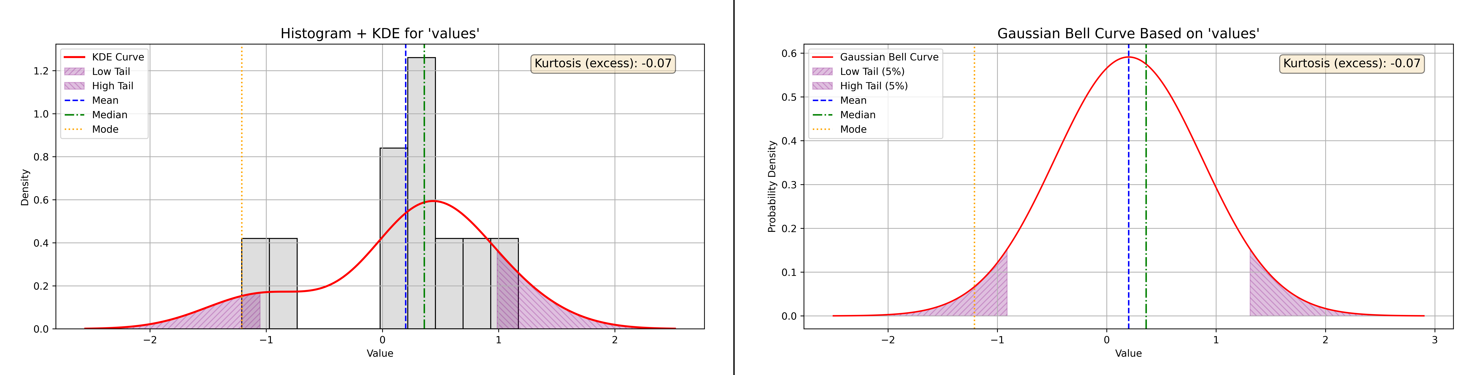
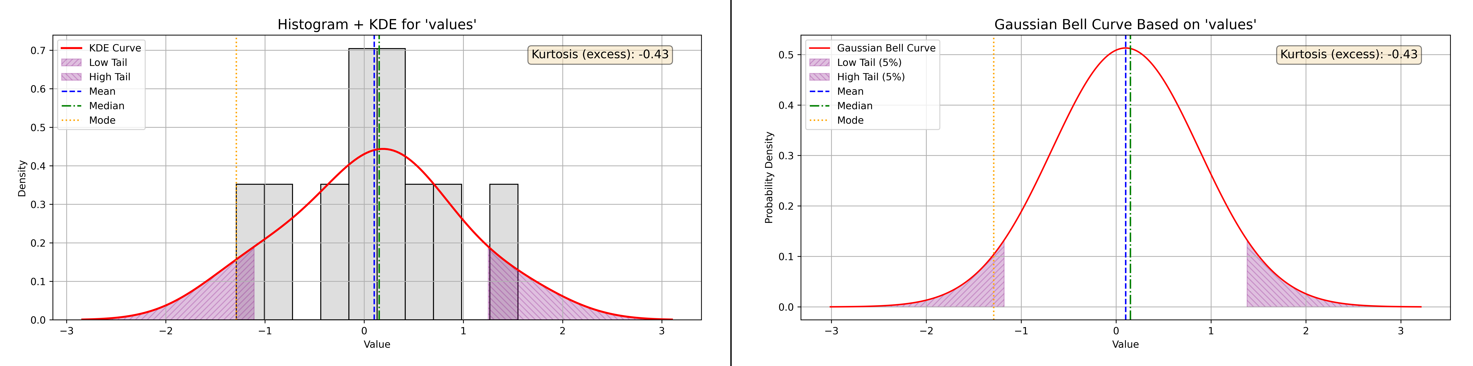
<h2 id="scenario-power-analysis-for-the-aacpcm-transcoding-scenario">Scenario: Power Analysis for the AAC→PCM Transcoding Scenario</h2>

<p>To design a defensible validation study, each AAC→PCM test item is treated as a <strong>binary diagnostic outcome</strong>:</p>

<ul>
  <li><strong>Success:</strong> All three metrics meet their acceptance thresholds
    <ul>
      <li>
\[\text{PCC} \ge 0.95\]
      </li>
      <li>
\[\text{MQD} \le 200\]
      </li>
      <li>
\[\text{LTASS deviation} \le 2 \text{ dB}\]
      </li>
    </ul>
  </li>
  <li><strong>Failure:</strong> Any threshold is violated</li>
</ul>

<p>This converts the study into a <strong>binomial proportion problem</strong>, where each file either passes or fails the method’s acceptance criteria.</p>

<hr />

<h3 id="defining-the-effect-size"><strong>Defining the Effect Size</strong></h3>

<p>For forensic use, the method must succeed on <strong>at least 99%</strong> of files:</p>

\[p_{\text{acceptable}} = 0.99\]

<p>We want enough statistical power to detect if the true success rate is <strong>95% or lower</strong>:</p>

\[p_{\text{unacceptable}} = 0.95\]

<p>The effect size is the difference:</p>

\[\Delta p = p_{\text{acceptable}} - p_{\text{unacceptable}} = 0.04\]

<p>This is the smallest performance drop considered meaningful for forensic decision‑making.</p>

<hr />

<h3 id="hypotheses-for-power-analysis"><strong>Hypotheses for Power Analysis</strong></h3>

\[H_0: p \ge 0.99 \quad \text{(method meets required performance)}\]

\[H_a: p \le 0.95 \quad \text{(method fails to meet required performance)}\]

<p>This is a <strong>one‑sided</strong> test because we only care about detecting under‑performance (failure).</p>

<hr />

<h3 id="error-rates-and-power-target"><strong>Error Rates and Power Target</strong></h3>

<p>Following the JFS framework:</p>

<ul>
  <li><strong>Type I error:</strong> α = 0.05</li>
  <li><strong>Power:</strong> 1 − β = 0.95</li>
</ul>

<p>This ensures a ≥ 95% probability of detecting a method that performs at or below p = 0.95.</p>

<hr />

<h3 id="determining-the-required-sample-size"><strong>Determining the Required Sample Size</strong></h3>

<p>Most readers don’t start from power formulas; they start from a practical question:</p>

<blockquote>
  <p>“How many original–questioned (O–Q) file pairs do I need per condition so this study isn’t a toy?”</p>
</blockquote>

<p>In this framework, each test item is one <strong>O–Q pair</strong>:</p>

<blockquote>
  <p>original PCM WAV → AAC (M4A) → questioned PCM WAV</p>
</blockquote>

<p>Each pair is classified as <strong>success</strong> (all thresholds met) or <strong>failure</strong> (any threshold violated). The power analysis operates on these success/failure outcomes.</p>

<p>For a typical AAC→PCM study with a modest number of conditions (for example, several bitrates and one or two sampling rates), a <strong>good planning rule</strong> is:</p>

<blockquote>
  <p><strong>Aim for about 20–25 O–Q file pairs per condition.</strong></p>
</blockquote>

<h4 id="example-4-bitrates--2-sampling-rates">Example: 4 bitrates × 2 sampling rates</h4>

<p>Suppose the study varies:</p>

<ul>
  <li>4 bitrates</li>
  <li>2 sampling rates</li>
</ul>

<p>This produces:</p>

<ul>
  <li>4 × 2 = 8 conditions (cells)</li>
</ul>

<p>Planning for <strong>21 O–Q pairs per condition</strong> yields:</p>

<ul>
  <li>21 pairs × 8 conditions = 168 O–Q comparisons in total</li>
</ul>

<p>From the statistical side, a one‑sided binomial power analysis with</p>

<ul>
  <li>target success rate $p_{\text{acceptable}} = 0.99$</li>
  <li>“unacceptable” rate $p_{\text{unacceptable}} = 0.95$</li>
  <li>significance level $\alpha = 0.05$</li>
  <li>power $1 - \beta = 0.95$</li>
</ul>

<p>shows that <strong>on the order of 160–180 total O–Q comparisons</strong> is sufficient to distinguish an acceptable method from an unacceptable one.</p>

<p>The <strong>21‑per‑condition</strong> design (168 total comparisons) falls comfortably within this range.</p>

<hr />

<h3 id="what-to-remember"><strong>What to remember</strong></h3>

<ul>
  <li>
    <p>Large datasets are not required for this type of validation study.</p>
  </li>
  <li>In a small design with only a few conditions, planning for <strong>≈20–25 O–Q file pairs per condition</strong> is typically enough for a statistically defensible study.
    <ul>
      <li>You do not need hundreds or thousands of tests for scientific rigor.</li>
      <li>But you also cannot rely on 1–2 tests and call the method validated.</li>
    </ul>
  </li>
  <li>The “170” number comes from the <strong>total number of O–Q comparisons</strong> needed across all conditions to satisfy the power analysis.
    <ul>
      <li>It is <strong>not</strong> 170 tests per condition.</li>
      <li>It is simply the total you get when you multiply <strong>20–25 per condition × the number of conditions</strong> in the study.</li>
    </ul>
  </li>
  <li>The practical design decision is the <strong>per‑condition count</strong>, not the total.
    <ul>
      <li>The total only looks large because it reflects <strong>all the combinations</strong> being tested (for example, 4 bitrates × 2 sampling rates = 8 conditions).</li>
      <li>With ~21 O–Q pairs per condition, the total naturally ends up near 160–180, which meets the statistical requirement.</li>
    </ul>
  </li>
</ul>

<hr />

<h3 id="why-this-matters-for-pcc-mqd-and-ltass"><strong>Why This Matters for PCC, MQD, and LTASS</strong></h3>

<p>Power analysis ensures that the study is capable of detecting:</p>

<ul>
  <li>PCC values that fall below acceptable correlation</li>
  <li>MQD values that indicate excessive waveform deviation</li>
  <li>LTASS deviations that exceed spectral tolerances</li>
</ul>

<p>If the method truly performs poorly, the study must have a high probability of revealing that failure.</p>

<hr />

<h3 id="where-simulation-fits-in"><strong>Where Simulation Fits In</strong></h3>

<p>Power analysis answers one question: <em>How many O–Q file pairs do we need so the study can detect meaningful failures?</em><br />
Simulation answers a different question: <em>Given the real variability of AAC→PCM behavior, is that sample size actually stable and defensible?</em></p>

<p>Monte Carlo simulation and bootstrapping allow us to explore how the method behaves across repeated, hypothetical versions of the study. These simulations help evaluate:</p>

<ul>
  <li><strong>Variability across conditions</strong> — how much PCC, MQD, and LTASS fluctuate across bitrates, sampling rates, and workflows.</li>
  <li><strong>Stability of the pass/fail decision</strong> — whether borderline cases remain borderline or flip unpredictably.</li>
  <li><strong>Uncertainty in the estimated success rate</strong> — how wide the confidence bands are around the method’s performance.</li>
  <li><strong>Robustness of the acceptance thresholds</strong> — whether the chosen PCC/MQD/LTASS cutoffs behave consistently across realistic data.</li>
</ul>

<p>Simulation does not replace power analysis. Instead, it checks whether the planned design (for example, <strong>≈20–25 O–Q pairs per condition</strong>) produces stable, interpretable results when the method is subjected to realistic variation.</p>

<p>Together, power analysis and simulation provide a defensible foundation for Step 3:</p>
<ul>
  <li>power analysis ensures the study is <strong>large enough</strong>,</li>
  <li>simulation ensures the study is <strong>stable enough</strong> to support reliable conclusions about the method’s operating range.</li>
</ul>

<hr />

<blockquote>
  <h3 id="continued-scenario-box-simple-simulation-scenario">Continued Scenario Box: Simple Simulation Scenario</h3>
  <blockquote>

    <p>Simulation provides a way to test whether the planned sample size (for example, <strong>≈20–25 O–Q pairs per condition</strong>) produces stable and interpretable results when the method is exposed to realistic variation.</p>

    <p>A typical simulation scenario looks like this:</p>

    <ol>
      <li>
        <p><strong>Assume a true success rate</strong> for each condition<br />
For example, 0.99 at high bitrates and 0.92 at low bitrates.</p>
      </li>
      <li>
        <p><strong>Generate many hypothetical studies</strong><br />
Each simulated study uses the same design as the real one (e.g., 21 O–Q pairs per condition).</p>
      </li>
      <li>
        <p><strong>Apply the same pass/fail thresholds</strong><br />
PCC, MQD, and LTASS thresholds are applied to each simulated O–Q pair.</p>
      </li>
      <li><strong>Evaluate stability</strong><br />
Across hundreds or thousands of simulated studies, examine:
        <ul>
          <li>how often each condition passes or fails,</li>
          <li>how wide the uncertainty bands are,</li>
          <li>whether borderline conditions behave consistently,</li>
          <li>whether the overall success rate remains stable.</li>
        </ul>
      </li>
      <li><strong>Check viability</strong><br />
If the simulated studies produce consistent, interpretable results, the design is considered stable.<br />
If the results fluctuate wildly, the design may need more O–Q pairs in specific conditions.</li>
    </ol>

    <p>This type of simulation does not change the required sample size.<br />
Instead, it confirms that the planned design is <strong>stable enough</strong> to support reliable conclusions about where the method works and where it does not.</p>
  </blockquote>
</blockquote>

<hr />

<p>Monte Carlo simulation and bootstrapping address the study’s <strong>variability and uncertainty</strong>. They show how much the PCC, MQD, and LTASS metrics can fluctuate when the same workflow is repeated across different devices, bitrates, sampling rates, or decoder implementations.</p>

<p>These simulations generate <strong>empirical distributions</strong> — essentially, many realistic “what if the study happened again?” outcomes. From these distributions we can see:</p>

<ul>
  <li>how stable the pass/fail decisions are,</li>
  <li>how wide the uncertainty bands should be,</li>
  <li>whether borderline conditions behave consistently,</li>
  <li>and whether the chosen thresholds remain reliable across realistic variation.</li>
</ul>

<p>This matters because a method is not validated by a single clean run; it is validated by showing that its performance would remain stable if the study were repeated under slightly different conditions.</p>

<p>Together, power analysis and simulation-based variability modeling form the statistical backbone of Step 3. Power analysis ensures the study is <strong>large enough</strong>, and simulation ensures the study is <strong>stable enough</strong> to support scientifically credible acceptance criteria and defensible error rates.</p>

<hr />

<h3 id="expecting-failures-in-a-validation-study"><strong>Expecting Failures in a Validation Study</strong></h3>

<p>In a real AAC→PCM validation study, we should expect to see some failures in the test results. These failures are not mistakes—they are signals that help define the method’s operating boundaries.</p>

<p>In our scenario, a common example is a <strong>sample‑rate mismatch</strong>. If the original PCM file is 48,000 Hz but the transcoding software defaults to 44,100 Hz unless explicitly overridden, the workflow will introduce resampling artifacts. In that case, the PCC, MQD, and LTASS measurements will reflect both codec behavior and the unintended sample‑rate conversion.</p>

<p>This is not a “bad” outcome. It tells us something important:</p>

<ul>
  <li>If the workflow does not force the correct sampling rate, the method will produce measurable deviations.</li>
  <li>Therefore, controlling the sampling rate becomes part of the method’s operational requirements.</li>
</ul>

<p>Simulation helps us understand how often these kinds of failures might appear under realistic variation. Power analysis ensures we have enough O–Q file pairs to detect these failures reliably. The failures themselves come from the <strong>testing</strong>, and they guide us toward the workflow controls that must be enforced in the full validation study.</p>

<p>In this way, the study does more than evaluate the method—it defines the method by identifying which operational factors must be controlled to ensure reliable, repeatable results.</p>

<hr />

<h3 id="dataset-design-is-a-scientific-act"><strong>Dataset Design Is a Scientific Act</strong></h3>

<p>A method cannot be validated on arbitrary data. Step 3 requires:</p>

<ul>
  <li><strong>custom datasets with known ground truth</strong></li>
  <li><strong>diverse, challenging, operationally realistic conditions</strong></li>
  <li><strong>explicit documentation of assumptions, preprocessing, and class balance</strong></li>
</ul>

<p>The JFS paper emphasizes:</p>

<blockquote>
  <p>“Develop custom datasets with known ground truth… incorporate diverse and challenging scenarios that reflect operational environments.”</p>
</blockquote>

<blockquote>
  <hr />
</blockquote>

<h3 id="simulationbased-planning"><strong>Simulation‑Based Planning</strong></h3>

<p>Simulation is used to check whether the planned sample size (for example, <strong>≈20–25 O–Q file pairs per condition</strong>) produces stable and defensible results when the study is repeated under realistic variation. Instead of relying on theoretical formulas alone, simulation creates many hypothetical versions of the study and shows how often the method would succeed or fail.</p>

<p>In our AAC→PCM scenario, simulations typically show that when the true success rate is around <strong>99%</strong>, a design with <strong>≈20–25 O–Q pairs per condition</strong> produces stable pass/fail outcomes across repeated trials. When the true success rate drops toward <strong>95%</strong>, simulations begin to show more variability and more borderline failures—exactly the behavior we want to detect.</p>

<p>This simulation‑based approach provides an empirical justification for the sample size. It demonstrates that the planned design is large enough to detect meaningful performance drops and stable enough to support defensible acceptance criteria. This kind of transparent, data‑driven justification is what courts and scientific bodies have been asking for since NAS (2009) and PCAST (2016).</p>

<hr />

<h3 id="step-3-is-iterative-by-design"><strong>Step 3 Is Iterative by Design</strong></h3>

<p>Pilot results (Step 4) feed back into Step 3. If variability is higher than expected, sample sizes must increase. If measurement instruments underperform, dataset design must change. This is not a linear process; it is a scientific one.</p>

<hr />
<h2 id="step-4-pilot-study-and-measurement-instrument-development"><strong>Step 4: Pilot Study and Measurement Instrument Development</strong></h2>

<p>If Step 3 defines the statistical architecture, Step 4 tests whether that architecture can stand.</p>

<p>This step introduces a concept that is almost entirely absent from digital and multimedia forensics:</p>

<p><strong>Measurement Instruments</strong>
 These are the analytic scripts, feature extractors, and quality metrics used to evaluate the method.</p>

<p>These instruments must be calibrated, tested, stress‑checked, and documented before full validation begins. The JFS paper emphasizes:</p>

<blockquote>
  <p>“Develop, calibrate, and preliminarily test measurement instruments… focusing on sensitivity, precision, and accuracy.”</p>
</blockquote>

<blockquote>
  <p><strong>KEY POINT:</strong>
When we perform <strong><em>point‑and‑click forensic</em></strong> examinations, these <strong>measurement instruments</strong> are what we assume were used to design and validate the tool’s internal operations. In practice, many tools do not publish or document their measurement instruments at all. Step 4 makes this explicit: the scientific method must be validated first, and the tool should only be trusted if it faithfully implements those validated measurement instruments.</p>
</blockquote>

<h3 id="pilot-studies-prevent-catastrophic-errors-later"><strong>Pilot Studies Prevent Catastrophic Errors Later</strong></h3>

<p>A pilot study is not a miniature validation. It is a feasibility test of:</p>

<ul>
  <li>the workflow</li>
  <li>the measurement instruments</li>
  <li>the dataset design</li>
  <li>the statistical assumptions</li>
</ul>

<p>The framework uses a simple allocation:</p>

<ul>
  <li><strong>10%</strong> of the dataset for studies under 1000 items</li>
  <li><strong>1%</strong> for studies over 1000 items</li>
</ul>

<p>This is enough to estimate variance, detect failure modes, and refine sampling plans without wasting resources.</p>

<p>In the AAC→PCM scenario, a pilot would immediately reveal issues such as <strong>sample‑rate mismatches</strong>, <strong>decoder inconsistencies</strong>, or <strong>unstable PCC/MQD/LTASS behavior</strong>—the exact kinds of operational failures Step 3 simulations warned us to expect.</p>

<hr />

<h3 id="the-gonogo-decision"><strong>The Go/No‑Go Decision</strong></h3>

<p>This is one of the most important—and most neglected—moments in forensic research.</p>

<p>After the pilot:</p>

<ul>
  <li>If the method behaves consistently,</li>
  <li>if the instruments are stable,</li>
  <li>if the workflow is reproducible,</li>
  <li>if the statistical assumptions hold,</li>
</ul>

<p>then the study moves forward.</p>

<p>If not, the method does <strong>not</strong> proceed to full validation.</p>

<p>The JFS paper explicit states:</p>

<blockquote>
  <p>“Make a <strong><em>go/no-go</em></strong> decision for proceeding to complete validation.”</p>
</blockquote>

<hr />

<h3 id="early-error-signals-matter"><strong>Early Error Signals Matter</strong></h3>

<p>Pilot studies often reveal:</p>

<ul>
  <li>sensitivity to specific data types</li>
  <li>systematic biases</li>
  <li>instability in extreme or rare cases</li>
  <li>unexpected variability in measurement outputs</li>
</ul>

<p>These are not failures—they are discoveries. They shape the full validation study and prevent misleading error rates later.</p>

<p>In the AAC→PCM example, a pilot might show that <strong>not forcing the correct sampling rate</strong> produces measurable deviations. That finding becomes an <strong>operational control requirement</strong> in the full validation study.</p>

<hr />

<h2 id="why-steps-3-and-4-matter"><strong>Why Steps 3 and 4 Matter</strong></h2>

<p>These steps are where the field’s habits collide with scientific expectations.</p>

<p>Digital and multimedia forensics has long relied on:</p>

<ul>
  <li>convenience datasets</li>
  <li>tool‑centric testing</li>
  <li>undocumented sampling</li>
  <li>uncalibrated measurement scripts</li>
  <li>unexamined statistical assumptions</li>
</ul>

<p>Steps 3 and 4 replace those habits with:</p>

<ul>
  <li>power analysis</li>
  <li>simulation</li>
  <li>custom datasets</li>
  <li>measurement instruments</li>
  <li>pilot studies</li>
  <li>go/no‑go decisions</li>
</ul>

<p>This is the point where the framework stops being aspirational and becomes operational.</p>

<hr />

<h2 id="step-5-community-introduction-of-the-method"><strong>Step 5: Community Introduction of the Method</strong></h2>

<p>With the pilot complete, the developing method is introduced to the broader forensic and scientific community. This step is about transparency and early critique, not consensus. Sharing the workflow, the pilot findings, and the initial error signals allows others to question assumptions, identify weaknesses, and confirm that the method is on a scientifically credible path.</p>

<p>In the AAC→PCM scenario, this means presenting early observations—such as sample‑rate mismatch behavior, decoder variability, or preliminary PCC/MQD/LTASS stability—and inviting feedback from practitioners, researchers, and legal experts. Community review strengthens the method before full validation begins and ensures that the study reflects not only internal testing but the collective expertise of the field.</p>

<hr />

<h2 id="closing-thoughts"><strong>Closing Thoughts</strong></h2>

<p>Steps 3, 4, and 5 are where a validation study becomes real. They force us to move beyond assumptions, beyond tool‑centric habits, and into the scientific discipline that courts and standards bodies now expect. Power analysis, simulation, custom datasets, calibrated measurement instruments, and early community review are not academic luxuries—they are the foundation of defensible forensic practice.</p>

<p>Our AAC→PCM scenario illustrates this clearly. Even something as simple as a sample‑rate mismatch can reveal whether a workflow is stable, whether a measurement instrument is trustworthy, and whether a method is ready for full validation. These early signals are not failures; they are guideposts that shape the method and define its operational boundaries.</p>

<p>With Steps 3 and 4 complete, the study now has a statistical backbone, a set of calibrated instruments, and a pilot‑tested workflow. Step 5 adds a final layer of transparency by introducing the developing method and pilot findings to the broader community. This early critique helps refine assumptions, confirm operational controls, and strengthen the method before full validation begins.</p>

<p>Together, these steps move the work from internal planning to open scientific dialogue, setting the stage for the next phase—full validation—with confidence, transparency, and scientific integrity.</p>

<hr />

<h1 id="references-used-in-the-blog-post"><strong>References Used in the Blog Post</strong></h1>

<h3 id="legal-standards"><strong>Legal Standards</strong></h3>
<ol>
  <li>
    <p><strong>Federal Rule of Evidence 702</strong><br />
<em>Federal Rules of Evidence, Rule 702 (as amended 2023).</em></p>
  </li>
  <li>
    <p><strong>Daubert v. Merrell Dow Pharmaceuticals, Inc.</strong><br />
<em>509 U.S. 579 (1993).</em></p>
  </li>
</ol>

<hr />

<h3 id="scientific--regulatory-reports"><strong>Scientific &amp; Regulatory Reports</strong></h3>
<ol>
  <li>
    <p><strong>National Academy of Sciences (NAS) Report</strong><br />
<em>National Research Council. Strengthening Forensic Science in the United States: A Path Forward. 2009.</em></p>
  </li>
  <li>
    <p><strong>President’s Council of Advisors on Science and Technology (PCAST) Report</strong><br />
<em>Forensic Science in Criminal Courts: Ensuring Scientific Validity of Feature‑Comparison Methods. 2016.</em></p>
  </li>
  <li>
    <p><strong>NIST Scientific Foundation Review – Digital Evidence</strong><br />
<em>NISTIR 8354: Digital Investigation Techniques. 2022.</em></p>
  </li>
  <li>
    <p><strong>UK Forensic Science Regulator Guidance</strong><br />
<em>FSR‑G‑218: Method Validation in Digital Forensics. 2020.</em></p>
  </li>
</ol>

<hr />

<h3 id="peerreviewed-scientific-journal-papers"><strong>Peer‑Reviewed Scientific Journal Papers</strong></h3>
<ol>
  <li><strong>Wales, G. S.</strong><br />
<em>A research‑focused framework for empirical method validation in digital and multimedia evidence.</em><br />
Journal of Forensic Sciences, 2026. DOI: 10.1111/1556-4029.70253.</li>
</ol>

<hr />]]></content><author><name></name></author><category term="method-validation" /><summary type="html"><![CDATA[Beyond the Button, The Next Steps: When Validation Becomes Empirical]]></summary></entry><entry><title type="html">A Forensic Perspective on Detecting AI‑Generated Audio</title><link href="https://ronin4n6labs.github.io/GenAI-Audio-Detection-Post/" rel="alternate" type="text/html" title="A Forensic Perspective on Detecting AI‑Generated Audio" /><published>2026-01-22T08:00:00+00:00</published><updated>2026-01-22T08:00:00+00:00</updated><id>https://ronin4n6labs.github.io/GenAI-Audio-Detection-Post</id><content type="html" xml:base="https://ronin4n6labs.github.io/GenAI-Audio-Detection-Post/"><![CDATA[<h2 id="when-claims-outpace-science-a-forensic-perspective-on-detecting-aigenerated-audio">When Claims Outpace Science: A Forensic Perspective on “Detecting AI‑Generated Audio”</h2>

<p>The rapid growth of synthetic audio has created understandable concern across legal, investigative, and forensic communities. With that concern has come a wave of articles, presentations, and commercial offerings claiming the ability to “detect AI‑generated audio.” One recent example is the Forensic Magazine article <em>“When Voices Lie: Detecting AI‑Generated Audio in a Courtroom.”</em> The piece raises important issues, but it also illustrates a broader challenge in this emerging space: <strong>claims of capability are often made in the absence of validated forensic methods.</strong></p>

<p>This post examines the article’s claims through the lens of <strong>forensic standards</strong>, <strong>method validation</strong>, and <strong>scientific defensibility</strong>.</p>

<hr />

<h2 id="1-the-articles-core-claims">1. The Article’s Core Claims</h2>

<p>The article argues that analysts can identify AI‑generated audio by examining:</p>

<ul>
  <li>prosodic irregularities (unexpected timing or emphasis patterns)</li>
  <li>spectral smoothness</li>
  <li>missing micro‑variability</li>
  <li>metadata inconsistencies</li>
  <li>“unnatural” speech patterns</li>
</ul>

<p>At one point, the authors state that synthetic voices may exhibit <em>“subtle but detectable artifacts that differ from human speech.”</em> Elsewhere, they suggest that trained analysts can identify these anomalies in a courtroom context.</p>

<p>These observations are not inherently unreasonable, as synthetic speech <em>can</em> differ from natural speech. But the leap from <strong><em>interesting signal characteristics</em></strong> to a <strong><em>forensic detection method</em></strong> is where scientific rigor becomes essential.</p>

<hr />

<h2 id="2-what-forensic-science-requires">2. What Forensic Science Requires</h2>

<p>Forensic science is not simply the application of technical knowledge. It is the application of <strong>validated, reproducible, empirically tested methods</strong> to questions of legal significance. Under frameworks such as:</p>

<ul>
  <li>Federal Rule of Evidence 702</li>
  <li><em>Daubert v. Merrell Dow Pharmaceuticals</em></li>
  <li>NIST Scientific Foundation Reviews</li>
  <li>OSAC and SWGDE guidance</li>
</ul>

<p>Notably, no SWGDE document currently addresses AI‑generated or synthetic audio, which underscores the lack of validated forensic methods in this area.</p>

<p>A forensic method must demonstrate:</p>

<ul>
  <li>known error rates</li>
  <li>repeatability</li>
  <li>reproducibility</li>
  <li>transparent methodology</li>
  <li>peer review</li>
  <li>limitations clearly articulated</li>
  <li>applicability to the specific question at hand</li>
</ul>

<p>At present, <strong>no published forensic method validation study</strong> exists for detecting AI‑generated audio that satisfies these criteria.</p>

<p>This is not a criticism of any individual analyst; it reflects the state of the science.</p>

<hr />

<h2 id="3-the-difference-between-observation-and-method">3. The Difference Between Observation and Method</h2>

<p>The article highlights several signal‑level features that may differ between natural and synthetic speech. These include:</p>

<ul>
  <li>overly smooth spectral transitions</li>
  <li>lack of breath transients</li>
  <li>inconsistent jitter/shimmer</li>
  <li>absence of microphone or room‑response artifacts</li>
</ul>

<p>These are legitimate <strong>observations</strong>. They can be useful <strong>investigative leads</strong>. They may even serve as the basis of future forensic methods.</p>

<p>Demonstrations of classifier performance in controlled research settings do not constitute forensic attribution methods suitable for legal conclusions.</p>

<p>But they are <strong>not</strong>, at this time:</p>

<ul>
  <li>validated indicators of AI generation</li>
  <li>generalizable across models</li>
  <li>tested for false positives</li>
  <li>tested for false negatives</li>
  <li>robust to adversarial manipulation</li>
  <li>admissible as a forensic conclusion</li>
</ul>

<p>Without validation, these observations remain <strong>hypotheses</strong>, not forensic methods.</p>

<hr />

<h2 id="4-the-challenge-of-selfappointed-genai-experts">4. The Challenge of Self‑Appointed GenAI Experts</h2>

<p>As interest in synthetic audio grows, so too does the number of analysts presenting themselves as experts in detecting AI‑generated speech. This is a natural development in any emerging field, but it also creates a challenge: <strong>expertise is sometimes asserted before methods have been validated</strong>.</p>

<p>Without published error rates, reproducibility studies, or cross‑model testing, claims of detection can become self‑reinforcing rather than scientifically grounded. Articles cite prior claims, those claims are used to justify new assertions, and the cycle continues without passing through the scientific validation that forensic disciplines require.</p>

<p>I sometimes refer to this as a <strong>“self‑licking ice cream cone” effect</strong> — not to disparage anyone, but to describe a feedback loop where claims of expertise generate articles, and those articles are then used to reinforce the appearance of expertise. It is a systemic issue, not a personal one, and it underscores why <strong>method validation must precede claims of capability</strong>, not follow them.</p>

<hr />

<h2 id="5-a-more-defensible-forensic-framing">5. A More Defensible Forensic Framing</h2>

<p>A scientifically grounded, courtroom‑appropriate position today would be:</p>

<blockquote>
  <p>“We cannot directly detect AI‑generated audio.<br />
We can only identify <strong>inconsistencies</strong> between the audio and what would be expected from natural human speech captured by a real device in a real environment.”</p>
</blockquote>

<p>This framing:</p>

<ul>
  <li>avoids overstating conclusions</li>
  <li>aligns with forensic standards</li>
  <li>respects the limits of current science</li>
  <li>preserves credibility</li>
  <li>allows meaningful analysis without claiming unsupported capabilities</li>
</ul>

<p>It also leaves room for future validated methods as the field matures.</p>

<hr />

<h2 id="6-constructive-path-forward">6. Constructive Path Forward</h2>

<p>Rather than dismissing attempts to analyze synthetic audio, we should channel them into <strong>structured research</strong>:</p>

<ul>
  <li>controlled datasets</li>
  <li>cross‑model testing</li>
  <li>reproducible workflows</li>
  <li>error‑rate characterization</li>
  <li>peer‑reviewed studies</li>
  <li>transparent reporting</li>
</ul>

<p>These are the same principles that guide method validation in every other forensic discipline.</p>

<p>Synthetic audio analysis will eventually mature into a defensible forensic practice, but only if it follows the same scientific path.</p>

<hr />

<h1 id="conclusion">Conclusion</h1>

<p>The Forensic Magazine article raises important concerns about synthetic audio, but its claims warrant caution. In the absence of validated methods, analysts should avoid asserting the ability to “detect AI‑generated audio” and instead focus on documenting <strong>observable inconsistencies</strong>, <strong>limitations</strong>, and <strong>uncertainties</strong>. As with any emerging technology, humility and methodological discipline remain our strongest safeguards against overstatement.</p>

<p>Forensic science earns trust not through confidence, but through <strong>discipline</strong>, <strong>transparency</strong>, and <strong>empirical rigor</strong>.</p>

<hr />

<h1 id="references">References</h1>

<p><strong>Legal and Scientific Standards</strong></p>
<ul>
  <li>Federal Rule of Evidence 702</li>
  <li><em>Daubert v. Merrell Dow Pharmaceuticals</em>, 509 U.S. 579 (1993)</li>
  <li>NIST IR 8354 Digital Investigative Techniques: A NIST Scientific Foundation Review (2022)</li>
  <li>OSAC Forensic Science Standards:
    <blockquote>
      <p>– SWGDE 10‑A‑001‑3.3 <em>Core Competencies for Forensic Audio</em></p>
    </blockquote>
  </li>
  <li>SWGDE Best Practices for Digital &amp; Multimedia Evidence:
    <blockquote>
      <p>– <em>Best Practices for Forensic Audio</em><br />
– <em>SWGDE Best Practices for Forensic Audio Authentication</em></p>
    </blockquote>
  </li>
</ul>

<p><strong>Article Discussed</strong></p>
<ul>
  <li><em>When Voices Lie: Detecting AI‑Generated Audio in a Courtroom</em>, Forensic Magazine (2026).  https://www.forensicmag.com/3425-Featured-Article-List/623734-When-Voices-Lie-Detecting-AI-Generated-Audio-in-a-Courtroom/</li>
</ul>

<p><strong>General Technical Literature on Synthetic Speech</strong></p>
<ul>
  <li>Stylianou, Y. “Voice Transformation: A Survey.”</li>
</ul>]]></content><author><name></name></author><category term="updates" /><summary type="html"><![CDATA[When Claims Outpace Science: A Forensic Perspective on “Detecting AI‑Generated Audio”]]></summary></entry><entry><title type="html">2025 Publications and Research Highlights</title><link href="https://ronin4n6labs.github.io/2025-Pub_and_Research_Highlights_Post/" rel="alternate" type="text/html" title="2025 Publications and Research Highlights" /><published>2026-01-11T00:00:00+00:00</published><updated>2026-01-11T00:00:00+00:00</updated><id>https://ronin4n6labs.github.io/2025-Pub_and_Research_Highlights_Post</id><content type="html" xml:base="https://ronin4n6labs.github.io/2025-Pub_and_Research_Highlights_Post/"><![CDATA[<p>As part of my ongoing work in independent forensic method research, 2025 included several publications in the <em>Journal of Forensic Sciences</em> that advanced foundational understanding in PDF image structures, iOS AAC encoding behavior, and cloud‑to‑mobile image integrity. These studies support my broader goal of strengthening the scientific reliability of digital and multimedia forensic methods through transparent, empirical, and reproducible research.</p>

<hr />

<h2 id="portable-document-format-pdf-image-embedding-and-analysis">Portable Document Format (PDF) Image Embedding and Analysis</h2>
<p><strong>Journal of Forensic Sciences</strong><br />
First published: 17 November 2025<br />
<a href="https://doi.org/10.1111/1556-4029.70229">https://doi.org/10.1111/1556-4029.70229</a></p>

<p>This technical note provides a foundational introduction to the internal structures that govern how images are embedded within PDF files. The study examined object models, syntax, and embedded image behaviors using hex‑level inspection and JSON‑based structure reports aligned with ISO PDF standards.</p>

<p>The work identified a modular taxonomy of embedded image types and documented software‑specific behaviors in Adobe Acrobat and LibreOffice Draw, including palette‑based GIF embeddings and metadata‑retention differences.</p>

<p><strong>My research perspective:</strong><br />
This was the initial exploratory study in my broader PDF‑embedding research program. It serves as a structural primer for examiners seeking to understand how embedded images are represented internally and how those structures can be interpreted and validated during forensic analysis.</p>

<hr />

<h2 id="quantitative-study-of-zeroamplitude-sample-padding-in-ios-aac-encoding">Quantitative Study of Zero‑Amplitude Sample Padding in iOS AAC Encoding</h2>
<p><strong>Journal of Forensic Sciences</strong><br />
First published: 19 August 2025<br />
<a href="https://doi.org/10.1111/1556-4029.70157">https://doi.org/10.1111/1556-4029.70157</a></p>

<p>This study examined the behavior of zero‑amplitude sample padding (“zero‑padding”) in AAC audio recordings generated by iOS devices. Using 100 recordings across 11 devices, the research measured pre‑ and post‑signal padding under controlled noise conditions and compared results across multiple analysis tools.</p>

<p>The findings revealed significant variability in pre‑signal padding, far exceeding Apple’s documented priming values, and demonstrated that background noise measurably influences padding behavior. Tool‑dependent differences were also observed in post‑signal padding.</p>

<p><strong>My research perspective:</strong><br />
This work is part of a multi‑phase effort to map error sources relevant to audio stream hashing. Understanding zero‑padding behavior is essential for designing mitigation strategies and planning the upcoming audio stream hashing validation study. It represents one component of a larger audio stream hashing error‑analysis series.</p>

<hr />

<h2 id="exploring-dropbox-image-downloads-to-iphone-via-safari">Exploring Dropbox Image Downloads to iPhone via Safari</h2>
<p><strong>Journal of Forensic Sciences</strong><br />
First published: 01 September 2025<br />
<a href="https://doi.org/10.1111/1556-4029.70173">https://doi.org/10.1111/1556-4029.70173</a></p>

<p>This validation study assessed the integrity of images downloaded from Dropbox to iPhones via Safari, an evidence‑collection scenario often used when specialized tools are unavailable. The research compared downloads saved to the Files folder versus the Photos application across multiple iPhone devices and iOS versions.</p>

<p>Results showed that pixel‑level content remained unchanged in all cases (100% SHA‑256 stream‑hash matches), while container‑level structures were modified only within the Photos application. MS‑SSIM scores remained at 1.0, indicating no perceptual degradation.</p>

<p><strong>My research perspective:</strong><br />
This project originated as a graduate‑level research assignment that I expanded with a small student group. It provided a controlled, quantitative look at a common acquisition workflow and helped clarify where structural changes occur during cloud‑to‑mobile transfers.</p>

<hr />

<h2 id="a-researchfocused-framework-for-empirical-method-validation-in-digital-and-multimedia-evidence">A Research‑Focused Framework for Empirical Method Validation in Digital and Multimedia Evidence</h2>
<p><strong>Journal of Forensic Sciences</strong><br />
First published: 04 January 2026<br />
<a href="https://doi.org/10.1111/1556-4029.70253">https://doi.org/10.1111/1556-4029.70253</a></p>

<p>Although published in early 2026, this paper represents my a significant 2025 research and documentation effort. It introduces a structured, research‑focused framework for empirical method validation in digital and multimedia forensic science. The framework adapts validation principles from traditional forensic disciplines and integrates guidance from NAS, PCAST, NIST, Daubert, and Federal Rule of Evidence 702.</p>

<p>The model outlines ten iterative steps, including dataset control, pilot calibration, error mapping, and community review, designed to support both full empirical validation and interim litigation‑focused adaptation.</p>

<p><strong>My research perspective:</strong><br />
This framework formalizes the methodological foundation for all of my independent research. It provides the structure I use when designing validation studies, planning statistical components, and documenting reproducible workflows across digital, multimedia, and forensic ML methods.</p>

<hr />

<h2 id="closing-thoughts">Closing Thoughts</h2>

<p>Each of these studies contributes to a broader effort to strengthen the scientific foundations of digital and multimedia forensic methods. My work remains fully independent; I take no clients, offer no services, sell no products, and receive no funding. The goal is simple: to advance transparent, reproducible, and empirically grounded forensic science.</p>

<p>More research updates will follow as ongoing projects in PDF analysis, audio stream hashing, and forensic machine learning progress through their next phases.</p>]]></content><author><name></name></author><summary type="html"><![CDATA[As part of my ongoing work in independent forensic method research, 2025 included several publications in the Journal of Forensic Sciences that advanced foundational understanding in PDF image structures, iOS AAC encoding behavior, and cloud‑to‑mobile image integrity. These studies support my broader goal of strengthening the scientific reliability of digital and multimedia forensic methods through transparent, empirical, and reproducible research.]]></summary></entry><entry><title type="html">Beyond the Button: Why Method Validation Still Isn’t Optional</title><link href="https://ronin4n6labs.github.io/beyond-the-button-method-validation-1-and-2/" rel="alternate" type="text/html" title="Beyond the Button: Why Method Validation Still Isn’t Optional" /><published>2026-01-08T15:00:00+00:00</published><updated>2026-01-08T15:00:00+00:00</updated><id>https://ronin4n6labs.github.io/beyond-the-button-method-validation-1-and-2</id><content type="html" xml:base="https://ronin4n6labs.github.io/beyond-the-button-method-validation-1-and-2/"><![CDATA[<h2 id="beyond-the-button-reclaiming-forensic-science-through-method-validation"><strong>Beyond the Button: Reclaiming Forensic Science Through Method Validation</strong></h2>

<p>If you want to be a push‑button examiner, someone who accepts whatever a digital or multimedia forensic tool outputs without questioning the method behind it, you’re not doing forensic science. You’re performing forensic theater. If you rely on interpretive instincts to decide whether an image has been altered, you’re not applying science, you’re applying art.</p>

<p>Forensic science begins when we test hypotheses. It lives in the space between competing explanations, and it demands that we quantify uncertainty, validate our methods, and report our findings with clarity and reproducibility. Anything less is opinion dressed as evidence.</p>

<p>To make this concrete, imagine testing a file‑carving <strong>tool</strong>. You load a USB drive with a few known files, run the tool, and it recovers them. It “works.” But what did you actually learn? Only that this tool, under these exact conditions, happened to recover these specific files. You learned nothing about the <strong>method</strong> the tool implements, nothing about its false negatives, nothing about its false positives, and nothing about how it behaves when files start off‑cluster or when the file system changes.</p>

<p>Now imagine a different approach. You create a controlled NTFS or exFAT volume. You place thousands of known files at precisely logged offsets—some aligned to cluster boundaries, some deliberately misaligned. You acquire the media, run a reference implementation of the carving method, and compare every recovered file to the ground truth. You measure how often the method detects real file headers, how often it misses them, how often it hallucinates files that don’t exist, and how those behaviors change across conditions.</p>

<p>That’s method validation. The first approach is assumption. The second is science.</p>

<p><strong>Are we trusting the output because it looks right, or because we have proven it’s right?</strong></p>

<p>This post begins a series walking through my Empirical Method Validation Framework. Today we focus on <strong>Step 1: Method Identification</strong> and <strong>Step 2: Literature Review &amp; Gap Analysis</strong>. Future posts will address the remaining steps in detail.</p>

<hr />

<h1 id="gap-analysis-what-our-search-revealed-about-the-state-of-method-validation">Gap Analysis: What Our Search Revealed About the State of Method Validation</h1>

<p>Over the past several weeks, and especially in a concentrated deep‑dive today, I ran a structured, multi‑engine search for digital and multimedia forensic <strong>method validation</strong> studies published from 2010 to the present. The goal was simple: find empirical work that reports diagnostic performance metrics or confusion matrices for forensic methods.</p>

<p>What we found was not encouraging.</p>

<h3 id="1-search-engines-dramatically-overreport-validation-studies"><strong>1. Search engines dramatically over‑report “validation” studies</strong></h3>

<p>Across three independent systems:</p>

<ul>
  <li>ChatGPT returned <strong>3</strong> “validation” studies</li>
  <li>Perplexity claimed <strong>35+</strong></li>
  <li>Le Chat identified <strong>7</strong></li>
</ul>

<p>But once we applied actual forensic criteria, ground truth, diagnostic metrics, confusion matrices, forensic purpose, legal framing, the list collapsed.</p>

<p>Most of what the engines labeled as “forensic validation” turned out to be:</p>

<ul>
  <li>machine learning benchmarks</li>
  <li>image tampering CNNs</li>
  <li>deepfake classifiers</li>
  <li>malware classifiers</li>
  <li>biometric recognition papers</li>
  <li>surveys and conceptual frameworks</li>
  <li>NIST‑style tool correctness tests</li>
</ul>

<p>These are not forensic method validations.</p>

<h3 id="2-tool-validation--method-validation"><strong>2. Tool validation ≠ method validation</strong></h3>

<p>This distinction is critical.</p>

<p>Search engines repeatedly treated <strong>tool tests</strong> (e.g., “does this software parse this file format correctly?”) as if they were <strong>method validations</strong> (“is this forensic procedure fit for purpose under Daubert?”).</p>

<p>Tool validation is about <strong>implementation correctness</strong>.<br />
Method validation is about <strong>scientific defensibility</strong>.</p>

<p>They are not interchangeable.</p>

<h3 id="3-true-forensic-method-validation-is-almost-nonexistent-across-digital-computer-mobile-and-multimedia-domains"><strong>3. True forensic method validation is almost nonexistent across digital, computer, mobile, and multimedia domains</strong></h3>

<p>After filtering out ML benchmarks and tool tests, we were left with:</p>

<ul>
  <li>a handful of digital/computer forensic <strong>tool validations</strong> (e.g., search functions, CFTT tests)</li>
  <li><strong>no</strong> digital/computer/mobile forensic <strong>method</strong> validations that report full diagnostic metrics</li>
  <li><strong>no</strong> multimedia forensic method validations that report full diagnostic metrics</li>
  <li><strong>one</strong> modern forensic method validation across all domains that includes the full metric suite and confusion matrices:
<strong>my 2024 JFS study on image stream hashing</strong></li>
</ul>

<p>That’s it.</p>

<h3 id="4-ml-papers-labeled-as-forensic-rarely-meet-forensic-standards"><strong>4. ML papers labeled as “forensic” rarely meet forensic standards</strong></h3>

<p>Many ML papers use the word “forensic,” but almost none:</p>

<ul>
  <li>define a forensic task</li>
  <li>report specificity, FPR, FNR, or MCC</li>
  <li>provide confusion matrices</li>
  <li>discuss error consequences</li>
  <li>offer explainability / transparency</li>
  <li>test robustness across datasets</li>
  <li>reference Daubert, FRE 702, NAS, PCAST, or NIST</li>
  <li>frame the work as a forensic method</li>
</ul>

<p>They are ML papers with forensic branding, not validated forensic methods.</p>

<h3 id="5-the-field-lacks-a-shared-operational-roadmap"><strong>5. The field lacks a shared, operational roadmap</strong></h3>

<p>The absence of method‑level validation is not due to lack of interest.<br />
It’s due to lack of structure.</p>

<p>Researchers have:</p>

<ul>
  <li>guidance documents</li>
  <li>measurement science principles</li>
  <li>legal expectations</li>
  <li>scattered examples</li>
</ul>

<p>…but no unified, step‑by‑step framework that translates all of this into a reproducible validation process.</p>

<p>This is the gap the Empirical Method Validation Framework is designed to fill.</p>

<hr />

<h1 id="why-method-validation-still-isnt-where-it-needs-to-be">Why Method Validation Still Isn’t Where It Needs To Be</h1>

<p>The gap analysis above revealed how rare true method validation is; now we turn to why that gap persists and why it matters.</p>

<p>Digital and multimedia forensics has matured, but one expectation keeps getting louder, from courts, regulators, and the scientific community:</p>

<p><strong>It’s not enough for an expert to be qualified. The method itself must be validated.</strong></p>

<p>Federal Rule of Evidence 702 and the Daubert line of cases make this explicit. Judges want testability, known error rates, peer review, and transparent reporting. Scientific bodies echo the same message: the NAS Report, PCAST, NIST scientific foundation reviews, and the UK Forensic Science Regulator all emphasize empirical rigor, reproducibility, and transparent methodology.</p>

<p>Even when a method never enters a courtroom—warrants, wiretaps, investigative triage—the principle holds. If a method informs a legal decision, it must be scientifically defensible.</p>

<p>Yet the field still lacks a unified, researcher‑friendly framework for method validation. We have pockets of guidance, but no cohesive roadmap that takes a practitioner from “I have a method” to “I have empirical evidence that this method works.”</p>

<p>That gap is why I developed the Empirical Method Validation Framework: a ten‑step, research‑centered process that operationalizes what both science and law require.</p>

<p>This post covers the first two steps.</p>

<hr />

<h1 id="step-1-method-identification-and-initial-feasibility">Step 1: Method Identification and Initial Feasibility</h1>

<p>Every validation effort begins with a deceptively simple question:</p>

<p><strong>What exactly is the method we’re validating?</strong></p>

<p>This step defines the method’s purpose, scope, and operational context. It also determines whether the method is even worth validating. Early feasibility prevents wasted effort and clarifies boundaries before deeper empirical work begins.</p>

<h3 id="what-to-establish-at-this-stage">What to establish at this stage</h3>

<ul>
  <li>
    <p><strong><em>Novel method:</em></strong><br />
No existing validation. Build a flexible, living research plan that captures assumptions, intended use, and contextual factors.</p>
  </li>
  <li>
    <p><strong><em>Previously described method:</em></strong><br />
Map what is known, what is missing, and how Step 2 will refine your validation objectives.</p>
  </li>
  <li>
    <p><strong>Core materials:</strong></p>
    <ul>
      <li>Method documentation</li>
      <li>Code or protocols</li>
      <li>Sample data</li>
      <li>Operational context</li>
    </ul>
  </li>
</ul>

<p>Document the “as‑intended” version of the method—assumptions, limitations, and boundaries. These details often disappear once a method enters operational use.</p>

<h3 id="why-this-step-matters">Why this step matters</h3>

<p>Many published studies stop at feasibility. Forensic practice cannot. Courts don’t admit feasibility; they admit validated methods.</p>

<h3 id="community-engagement-begins-here">Community engagement begins here</h3>

<p>For novel methods, early transparency pays dividends. Sharing preliminary findings helps refine the method, identify blind spots, and build scientific acceptance long before publication.</p>

<hr />

<h1 id="step-2-literature-review-and-gap-analysis">Step 2: Literature Review and Gap Analysis</h1>

<p>Once the method is defined, the next question is:</p>

<p><strong>What do we already know—and what don’t we know—about this method or anything like it?</strong></p>

<p>This step establishes the scientific foundation for the validation plan.</p>

<h3 id="a-defensible-review-must-include">A defensible review must include</h3>

<ul>
  <li>Practitioner‑focused sources (SWGDE, NIST CFTT, recent validation studies)</li>
  <li>Foundational scientific bodies (NAS, PCAST, NIST scientific foundation reviews)</li>
  <li>Regulatory guidance (UK Forensic Science Regulator)</li>
</ul>

<p>These sources define modern expectations for empirical rigor, reproducibility, and transparent error‑rate reporting.</p>

<p><strong>Our own multi‑engine search showed how easily search systems misclassify ML benchmarks and tool tests as “validation,” which makes a disciplined, criteria‑driven review essential.</strong></p>

<h3 id="what-the-gap-analysis-should-uncover">What the gap analysis should uncover</h3>

<ul>
  <li>Operational limitations</li>
  <li>Unexplored error modes</li>
  <li>Sample size or generalizability issues</li>
  <li>Known vulnerabilities affecting reliability</li>
</ul>

<p>These gaps shape the stress tests, edge cases, and robustness checks that will appear later in the validation study.</p>

<h3 id="this-step-continues-throughout-the-framework">This step continues throughout the framework</h3>

<p>The literature review informs:</p>

<ul>
  <li><strong>Step 6:</strong> Error identification</li>
  <li><strong>Step 7:</strong> Error mitigation</li>
  <li>Statistical reporting and study design</li>
</ul>

<p>A validation framework that doesn’t evolve with the literature isn’t a framework—it’s a snapshot.</p>

<hr />

<h2 id="final-thoughts">Final Thoughts</h2>

<p>This series is dedicated to advancing forensic science through transparent, reproducible, empirically grounded methodology. Steps 1 and 2 lay the foundation. The remaining steps—pilot testing, error mapping, statistical evaluation, and community dissemination—will be covered in future posts.</p>

<p>Forensic science moves forward not by consensus, but by evidence.</p>

<p>The next post will walk through pilot testing and controlled data generation — the point where validation moves from planning to empirical reality.</p>

<hr />

<h1 id="references-used-in-the-blog-post"><strong>References Used in the Blog Post</strong></h1>

<h3 id="legal-standards"><strong>Legal Standards</strong></h3>
<ol>
  <li>
    <p><strong>Federal Rule of Evidence 702</strong><br />
<em>Federal Rules of Evidence, Rule 702 (as amended 2023).</em><br />
Governs admissibility of expert testimony, requiring sufficient facts, reliable principles, and proper application.</p>
  </li>
  <li>
    <p><strong>Daubert v. Merrell Dow Pharmaceuticals, Inc.</strong><br />
<em>509 U.S. 579 (1993).</em><br />
U.S. Supreme Court decision establishing the Daubert standard for scientific evidence (testability, peer review, error rates, standards).</p>
  </li>
</ol>

<hr />

<h3 id="scientific--regulatory-reports"><strong>Scientific &amp; Regulatory Reports</strong></h3>
<ol>
  <li>
    <p><strong>National Academy of Sciences (NAS) Report</strong><br />
<em>National Research Council. Strengthening Forensic Science in the United States: A Path Forward. National Academies Press, 2009.</em><br />
Foundational critique of forensic science, emphasizing empirical validation and scientific rigor.</p>
  </li>
  <li>
    <p><strong>President’s Council of Advisors on Science and Technology (PCAST) Report</strong><br />
<em>PCAST. Forensic Science in Criminal Courts: Ensuring Scientific Validity of Feature‑Comparison Methods. Executive Office of the President, 2016.</em><br />
Defines empirical validity and reliability requirements for forensic methods.</p>
  </li>
  <li>
    <p><strong>NIST Scientific Foundation Review – Digital Evidence</strong><br />
<em>National Institute of Standards and Technology. NISTIR 8354: Digital Investigation Techniques: A NIST Scientific Foundation Review. 2022.</em><br />
Reviews scientific foundations and validation expectations for digital and multimedia forensic methods.</p>
  </li>
  <li>
    <p><strong>UK Forensic Science Regulator Guidance</strong><br />
<em>Forensic Science Regulator. FSR‑G‑218: Method Validation in Digital Forensics. United Kingdom, 2020.</em><br />
Provides validation requirements for digital forensic methods, emphasizing reproducibility and transparency.</p>
  </li>
</ol>

<hr />

<h3 id="practitionerfocused-standards-referenced-in-step-2"><strong>Practitioner‑Focused Standards (Referenced in Step 2)</strong></h3>
<ol>
  <li>
    <p><strong>SWGDE Validation Guidance</strong><br />
<em>Scientific Working Group on Digital Evidence (SWGDE). “Best Practices for Validation of Digital Evidence Tools and Software.” Various versions, 2019–2024.</em></p>
  </li>
  <li>
    <p><strong>NIST Computer Forensics Tool Testing (CFTT) Program</strong><br />
<em>National Institute of Standards and Technology. Computer Forensics Tool Testing Program Reports.</em><br />
Provides empirical testing and validation results for forensic tools.</p>
  </li>
  <li>
    <p><strong>Horsman, G.</strong><br />
<em>Recent validation and reliability studies in digital forensics (various publications, 2018–2024).</em></p>
  </li>
  <li>
    <p><strong>Brunty, J.</strong><br />
   <em>Validation and reliability research in multimedia forensics (various publications, 2018–2024).</em></p>
  </li>
</ol>

<hr />]]></content><author><name></name></author><category term="method-validation" /><summary type="html"><![CDATA[Beyond the Button: Reclaiming Forensic Science Through Method Validation]]></summary></entry><entry><title type="html">Moving Beyond Descriptive Statistics</title><link href="https://ronin4n6labs.github.io/Moving-Beyond-Descriptive-Statis-Post/" rel="alternate" type="text/html" title="Moving Beyond Descriptive Statistics" /><published>2025-08-25T08:30:00+00:00</published><updated>2025-08-25T08:30:00+00:00</updated><id>https://ronin4n6labs.github.io/Moving-Beyond-Descriptive-Statis-Post</id><content type="html" xml:base="https://ronin4n6labs.github.io/Moving-Beyond-Descriptive-Statis-Post/"><![CDATA[<h3 id="we-have-calculated-our-descritpive-statistics---so-what">We Have Calculated Our Descritpive Statistics - So What?</h3>

<p>Just reporting the descriptive statistics results can be informative, but many of us are visual people and we need something visual to see the information at a deeper level.  I like to use box plots with whiskers and bell curves to help me go beyond just calculating the descriptive statistics to get a sense of the data.  In the visualulization of the descriptive statsitics, we can see things like variance, outliers, skewness, and kurtosis. Let’s take a deep dive in these areas so you can see how to visualize the data and better sentisize descriptive statistics.  So, let’s take the raw data that I used in the previous post on Descriptive Statsitics and we will add some visual information.</p>

<hr />

<h2 id="lets-begin-with-variance-and-outliers">Lets Begin with Variance and Outliers</h2>

<p>We want visual summary that complements numeric measures of variance and highlights unusual data points in one clear graphic. Let’s compare a descriptive statistical table with a powerful visual summary.</p>

<h3 id="reporting-descriptive-statistics-in-a-table">Reporting Descriptive Statistics In A Table</h3>

<p>In my previous blog post you may remember that I offered the following raw statistical data:</p>

<p><strong>Example Dataset</strong></p>
<div class="language-plaintext highlighter-rouge"><div class="highlight"><pre class="highlight"><code>0.985
0.982
0.980
0.978
0.977
0.976
0.975
0.999
0.963
0.981
</code></pre></div></div>
<p><strong><em>Table 1 - Our Example Dataset</em></strong></p>

<p>If we run the descriptive statstics on this data you would have a descriptive statistics report like the following:</p>

<p align="center">
  <img src="/images/Descriptive-Stats-Report-Example.png" width="500" />
</p>

<p><strong><em>Figure 1 - Example of Descriptive Statistics Report</em></strong></p>

<p>If you are strickly a numbers person and do not need anything visual, this may be more than enough information for you to see patterns and understand the statistical relevance of the dataset of numbers.  I on the other hand need to visualize the data.  This is where we can use our box plot with whiskers and bell curves.</p>

<p>However, before we show the visuals for this data set, let’s understand what our visuals do and what they can tell us when we use them.  To begin, let’s look at Box Plots with Whiskers.</p>

<hr />
<h2 id="understanding-the-box-plot-with-whiskers">Understanding the Box Plot with Whiskers</h2>
<p>The image below shows a box plot, a statistical chart designed to summarize a dataset’s key distribution features at a glance.</p>

<p align="center">
  <img src="/images/box-plot-example.png" width="500" />
</p>

<p><strong><em>Figure 2 - Example of Box Plot with Whiskers</em></strong></p>

<p>This plot is built on the following teaching dataset:</p>

<p><strong>Box Plot Teaching Datasett</strong></p>
<div class="language-plaintext highlighter-rouge"><div class="highlight"><pre class="highlight"><code>3
7
8
12
13
014
18
21
23
27
</code></pre></div></div>
<p><strong><em>Table 2 - Box Plot Teaching Dataset</em></strong></p>

<h3 id="key-components-in-the-plot">Key Components in the Plot</h3>

<p><strong>1. The Box (Interquartile Range, IQR)</strong></p>

<ul>
  <li>
    <p>The box spans from the first quartile (Q1) at 8 to the third quartile (Q3) at 21.</p>
  </li>
  <li>
    <p>This range — known as the IQR — contains the middle 50% of all values in our dataset.</p>
  </li>
  <li>
    <p>IQR = Q3 – Q1 = 21 – 8 = 13</p>
  </li>
</ul>

<p><strong>2. The Median (Q2)</strong></p>

<ul>
  <li>
    <p>The horizontal line inside the box marks the dataset’s median value, 13.5.</p>
  </li>
  <li>
    <p>Half the values are below this line, and half are above it.</p>
  </li>
</ul>

<p><strong>3. The Whiskers (Minimum and Maximum)</strong></p>

<ul>
  <li>
    <p>Lines (or “whiskers”) extend from the box to the smallest data point (3) and largest data point (27) in the dataset.</p>
  </li>
  <li>
    <p>In some box plot conventions, whiskers may stop at a set distance (1.5 × IQR) from the quartiles, with any points beyond shown as outliers — but here, our whiskers extend to the actual min and max values.</p>
  </li>
</ul>

<p><strong>4. Labels and Annotations</strong></p>

<ul>
  <li>
    <p>Each critical value (Q1, Q2, Q3, Min, Max) is labeled directly on the plot.</p>
  </li>
  <li>
    <p>The IQR is highlighted with a double‑headed arrow to visually connect the concept of spread to the box width.</p>
  </li>
</ul>

<hr />

<h3 id="why-this-visualization-matters">Why This Visualization Matters</h3>

<p>The box plot lets us:</p>

<ul>
  <li>
    <p>See where most of our data lies (inside the box).</p>
  </li>
  <li>
    <p>Identify central tendency (the median line).</p>
  </li>
  <li>
    <p>Understand spread (IQR and whiskers).</p>
  </li>
  <li>
    <p>Spot potential outliers at a glance.</p>
  </li>
</ul>

<p>This particular dataset’s box plot shows that:</p>

<ul>
  <li>
    <p>The middle half of the data lies in a considerably broad range (IQR = 13).</p>
  </li>
  <li>
    <p>The data are fairly symmetric, since the median sits near the center of the box and whiskers are of similar length.</p>
  </li>
</ul>

<h3 id="what-does-a-box-plot-with-outliers-look-like">What does a box plot with outliers look like?</h3>

<p align="center">
  <img src="/images/box-plot-outliers-example.png" width="500" />
</p>

<p><strong><em>Figure 3 - Example of Box Plot with Whiskers and Outliers</em></strong></p>

<p>Building on the foundation from Figure 2, which presented our classic box plot from a clean dataset, Figure 3 expands the concept to showcase how box plots reveal outliers—those data points that fall well outside the “typical” range.</p>

<p>This enhanced box plot uses an updated teaching dataset:</p>

<p><strong>Box Plot Teaching Dataset with Outliers</strong></p>

<div class="language-plaintext highlighter-rouge"><div class="highlight"><pre class="highlight"><code>-20
3
7
8
12
13
014
18
21
23
27
50
</code></pre></div></div>
<p><strong><em>Table 3 – Teaching Dataset with Outliers</em></strong></p>

<p><strong><em>Key Components in the New Plot</em></strong></p>

<p><strong>1. The Box (Interquartile Range, IQR)</strong></p>

<ul>
  <li>
    <p>The central box again spans from the first quartile (Q1) to the third quartile (Q3).</p>
  </li>
  <li>
    <p>This box still captures the middle 50% of the data—unchanged in concept even when outliers are present.</p>
  </li>
</ul>

<p><strong>2. The Median (Q2)</strong></p>

<ul>
  <li>The horizontal line inside the box marks the dataset’s median, a pivot point that divides the data in half.</li>
</ul>

<p><strong>3. Whiskers (Minimum and Maximum Non-Outlier Values)</strong></p>

<ul>
  <li>
    <p>With added outliers on both ends, the whiskers no longer reach all the way to the minimum and maximum.</p>
  </li>
  <li>
    <p>Instead, they stop at the lowest and highest non-outlier values—effectively visually separating “ordinary” data from extremes.</p>
  </li>
</ul>

<p><strong>4. Outliers: Now Clearly Visible</strong></p>

<ul>
  <li>
    <p>Any data point below Q1 – 1.5 × IQR or above Q3 + 1.5 × IQR is flagged as an outlier.</p>
  </li>
  <li>
    <p>In this dataset, –20 and 50 are outliers:</p>

    <ul>
      <li>
        <p>They appear as distinct, colored dots beyond the whiskers on the plot.</p>
      </li>
      <li>
        <p>Labels highlight their status and value, making interpretation easy for any reader.</p>
      </li>
    </ul>
  </li>
</ul>

<p><strong>5. Annotations</strong></p>

<ul>
  <li>
    <p>Quartiles, median, whisker endpoints, and IQR are all labeled as before.</p>
  </li>
  <li>
    <p>Outliers are labeled in red, ensuring they stand out as statistical anomalies.</p>
  </li>
</ul>

<h3 id="why-this-visualization-matters-1">Why This Visualization Matters</h3>

<p>This new figure demonstrates the true teaching power of box plots:</p>

<ul>
  <li>
    <p>Outliers are instantly recognizable, with visually and numerically clear separation from bulk data.</p>
  </li>
  <li>
    <p>Whiskers illustrate the reasonable spread, stopping elegantly at the boundaries of typical values.</p>
  </li>
  <li>
    <p>Annotations guide the eye to what matters—central tendency, spread, and the uncommon points worth deeper investigation.</p>
  </li>
</ul>

<p><strong>Comparing Figure 2 and Figure 3:</strong></p>

<ul>
  <li>
    <p>Figure 2 presented a symmetric, “well-behaved” box plot, perfect for introducing the concept.</p>
  </li>
  <li>
    <p>Figure 3 introduces the nuance: not all data are tidy, and box plots are built to detect and display extremes explicitly.</p>
  </li>
</ul>

<p><strong>Interpreting real-world data often means watching for outliers, as they can represent errors, rare events, or fascinating exceptions. This enhanced box plot makes detecting them quick and comprehensible.</strong></p>

<hr />

<h3 id="box-plots---where-whisker-endpoints-end-and-outliers-begin">Box Plots - Where Whisker Endpoints End and Outliers Begin</h3>

<p>Some may wonder how we seperate whiker endpoints and determine outliers. In traditional box plots, the whiskers extend to the largest and smallest valudes that are not outliers.  However, we have to calculate these endpoints and we use the following formulas:</p>

<ul>
  <li>
    <p><strong>Lower Fence:</strong></p>

    <p>Lower Fence = Q1 - 1.5 x IQR</p>
  </li>
  <li>
    <p><strong>Upper Fence:</strong></p>

    <p>Upper Fence = Q3 + 1.5 x IQR</p>
  </li>
</ul>

<p><strong>Definitions for beginners:</strong></p>

<ul>
  <li>
    <p>Q1: First quartile (th 25th percentile).</p>
  </li>
  <li>
    <p>Q3: Third quartile (the 75th percentile).</p>
  </li>
  <li>
    <p>IQR: The range between Q3 and Q1 (IQR = Q3 - Q1).</p>
  </li>
</ul>

<p><strong>Steps:</strong></p>

<ol>
  <li>
    <p>Calculate Q1 and Q3, then find the IQR.</p>
  </li>
  <li>
    <p>Find the lower fence and upper fence using the formulas above.</p>
  </li>
  <li>
    <p>The whickers extend to:</p>
  </li>
</ol>

<ul>
  <li>
    <p>The smallest data value greater than or equal to the lower fence.</p>
  </li>
  <li>
    <p>The largest data value less than or equal to the upper fence.</p>
  </li>
</ul>

<p>Any data points beyond these fences are considered outliers and are plotted separately.</p>

<h3 id="example">Example</h3>

<p>Let’s use our dataset from Table 3</p>

<div class="language-plaintext highlighter-rouge"><div class="highlight"><pre class="highlight"><code>-20
3
7
8
12
13
014
18
21
23
27
50
</code></pre></div></div>
<p><strong><em>Table 4 – Teaching Dataset with Outliers</em></strong></p>

<ul>
  <li>Q1 = 8.5, Q3 = 21.5 =&gt; IQR = 13</li>
  <li>Lower fence: 8.5 - 1.5 x 3 = -10</li>
  <li>Upper fence: 21.5 + 1.5 x 3 = 40</li>
</ul>

<p>Whiskers end at:</p>

<ul>
  <li>Smallest value ≥ -10 -&gt; 3</li>
  <li>Largest value ≤ 40 -. 27</li>
</ul>

<p>Outliers: values &lt; 010(-20) and &gt; 40 (50)</p>

<hr />

<h3 id="summarizing-variance-and-outliers">Summarizing Variance and Outliers</h3>

<ul>
  <li>
    <p><strong>Variance (Spread):</strong> The box plot clearly shows the interquartile range (IQR), which captures the middle 50% of our data, giving a robust measure of spread that isn’t skewed by extreme values. The length of the box and the whiskers visually communicate how data points vary around the median.</p>
  </li>
  <li>
    <p><strong>Outliers:</strong> The plot explicitly identifies outliers—data points outside the whiskers defined by <strong>1.5×IQR</strong> beyond Q1 and Q3. These outliers are separately marked and labeled, making them easy to spot and understand.</p>
  </li>
</ul>

<p>Overall, the box plot provides an intuitive, visual summary that complements numeric measures of variance and highlights unusual data points in one clear graphic.</p>

<hr />

<h2 id="understanding-skewness-in-data">Understanding Skewness in Data</h2>

<p><strong>What Is Skewness?</strong></p>

<p>Skewness is a way to describe how data is spread out—specifically, whether it leans more to one side or is balanced evenly. Imagine a graph showing how many people earn different amounts of money, or how students scored on a test. If the graph is perfectly balanced, it’s called “symmetrical” or “zero skewness.” If it’s stretched out more on one side, it’s “skewed.”</p>

<p><strong>Types of Skewness</strong></p>

<p><strong>1. Balanced (Zero Skewness)</strong></p>

<ul>
  <li>
    <p><strong><em>What it means:</em></strong> The data is evenly spread on both sides of the center. The left and right sides of the graph are mirror images.</p>
  </li>
  <li>
    <p><strong><em>Real-life example:</em></strong> Heights of adults in a large group often form a balanced, bell-shaped curve.</p>
  </li>
  <li>
    <p><strong><em>Why it matters:</em></strong> In balanced data, the average (mean), the middle value (median), and the most common value (mode) are all about the same. This makes it easy to describe the “typical” value.</p>
  </li>
</ul>

<p><strong>2. Right Skewed (Positive Skewness)</strong></p>

<ul>
  <li>
    <p><strong><em>What it means:</em></strong> The graph has a long tail on the right side. Most values are on the lower end, but a few are much higher.</p>
  </li>
  <li>
    <p><strong><em>Real-life example:</em></strong> Income is often right-skewed. Most people earn average or below-average amounts, but a few earn a lot more, pulling the average up.</p>
  </li>
  <li>
    <p><strong><em>Why it matters:</em></strong> The average (mean) is higher than the middle value (median), so the mean can be misleading. For example, if a few people in a group are very rich, the average income will look higher than what most people actually earn.</p>
  </li>
</ul>

<p><strong>3. Left Skewed (Negative Skewness)</strong></p>

<ul>
  <li>
    <p><strong><em>What it means:</em></strong> The graph has a long tail on the left side. Most values are on the higher end, but a few are much lower.</p>
  </li>
  <li>
    <p><strong><em>Real-life example:</em></strong> Age at retirement can be left-skewed. Most people retire around the same age, but a few retire much earlier, pulling the average down.</p>
  </li>
  <li>
    <p><strong><em>Why it matters:</em></strong> The average (mean) is lower than the middle value (median), so the mean can make it seem like people retire earlier than they actually do.</p>
  </li>
</ul>

<p><strong>Why Should Laymen Care About Skewness?</strong></p>

<ul>
  <li>
    <p><strong><em>Understanding the “Typical” Value:</em></strong> Skewness indicates whether the average (mean) or the median better represents a “typical” case. For instance, in income data, a few very high earners can pull the mean upward, making the average misleading. Knowing skewness helps you see when to rely on the median instead, which better reflects what most people experience.</p>
  </li>
  <li>
    <p><strong><em>Spotting Outliers:</em></strong> Skewness also reveals the presence of unusual or extreme values that don’t fit the general pattern, like exceptionally high incomes or abnormally low test scores. Recognizing these helps prevent decisions based on misleading averages or faulty assumptions.</p>
  </li>
  <li>
    <p><strong><em>Making Better Decisions:</em></strong> Knowing your data’s shape supports smarter choices. For example, if house prices show right skewness (a few expensive homes pushing the average up), expecting to pay the average price might lead to budget surprises. Awareness of skewness adjusts expectations realistically.</p>
  </li>
  <li>
    <p><strong><em>Choosing the Right Tools:</em></strong> Many statistical tests assume your data is balanced and symmetric (normal). When this isn’t the case due to skewness, you may need to use alternative methods or data transformations to get more accurate results. This is especially important in research fields, such as digital and multimedia forensic science, where testing for normality and homogeneity ensures valid conclusions.</p>
  </li>
</ul>

<p><strong>Summary Table</strong></p>

<h4 id="balanced-zero-skew">Balanced (Zero Skew)</h4>
<ul>
  <li><strong>Shape</strong>: Even on both sides</li>
  <li><strong>Example</strong>: Adult heights</li>
  <li><strong>Pattern</strong>: Mean ≈ Median ≈ Mode</li>
  <li><strong>Watch-Out</strong>: Central tendency is reliable</li>
</ul>

<h4 id="right-skewed-positive">Right Skewed (Positive)</h4>
<ul>
  <li><strong>Shape</strong>: Tail extends to the right</li>
  <li><strong>Example</strong>: Incomes</li>
  <li><strong>Pattern</strong>: Mean &gt; Median</li>
  <li><strong>Watch-Out</strong>: Mean exaggerates central tendency</li>
</ul>

<h4 id="left-skewed-negative">Left Skewed (Negative)</h4>
<ul>
  <li><strong>Shape</strong>: Tail extends to the left</li>
  <li><strong>Example</strong>: Retirement ages</li>
  <li><strong>Pattern</strong>: Mean &lt; Median</li>
  <li><strong>Watch-Out</strong>: Mean underrepresents central tendency</li>
</ul>

<p><strong><em>Table 5 – Skewness Summary Table</em></strong></p>

<p><strong><em>Bottom Line</em></strong> - 
Skewness is about whether your data is balanced or leans to one side. It helps you understand what’s “typical,” spot unusual values, and avoid being misled by averages. For everyday decisions—like understanding salaries, test scores, or prices—knowing about skewness can help you get a clearer, more accurate picture.  So, let’s look at a visual plots of skewness.</p>

<hr />
<h3 id="visual-plots-of-skewness">Visual Plots of Skewness</h3>

<p>In this section, we’ll provide control datasets specifically designed to illustrate different skewness effects. You’ll also learn about two common visualization methods used to view and interpret skewness: the Gaussian curve (also known as the “bell curve”) and the histogram with a Kernel Density Estimate (KDE).</p>

<p>Additionally, for each control dataset, I’ll include a skewness report. This report will demonstrate how applying a logical interpretation framework can aid in determining skewness — or, as we say in forensic science, in making a “finding.”</p>

<p>By combining visual tools with analytical insights, you’ll be better equipped to understand and detect skewness in your own data.</p>

<h3 id="control-data-sets-for-skewness">Control Data Sets For Skewness</h3>

<p>Here are three normalized (mean≈0, standard deviation≈1) example datasets, each with 10 numbers, illustrating different types of skewness. These are crafted to show classic patterns for left (negative), none (normal), and right (positive) skewness:</p>

<h4 id="1-left-negative-skewness">1. Left (Negative) Skewness</h4>
<p>Most values are higher, but a few low values pull the tail left.</p>

<div class="language-plaintext highlighter-rouge"><div class="highlight"><pre class="highlight"><code>-1.21
-0.83
0.15
0.21
0.33
0.39
0.45
0.62
0.72
1.17
</code></pre></div></div>

<p>Tail extends to the left, with most data toward the higher end numercally.  We can see that here, but let’s visualize it.</p>

<p align="center">
  <img src="/images/Left-Skewed-Control-Data-2-plots.png" width="750" />
</p>

<p><strong><em>Figure 4 - Example of Left Skewness with Histogram plus KDE and Baussian Curve plots</em></strong></p>

<p>Let’s look at the Left Skewness report next.</p>

<div style="border: 2px solid #4A90E2; padding: 15px; border-radius: 8px; background-color: #E8F0FE; max-width: 600px; font-family: Arial, sans-serif;">

  <h3 style="color: #2C3E50; margin-top: 0;">Skewness Analysis Report for ‘values’</h3>

  <p style="color: #222222;"><strong>Calculated Skewness Value:</strong> -0.89</p>
  <p style="color: #222222;">→ <strong>Direction:</strong> Left-skewed (tail to the left)</p>
  <p style="color: #222222;">→ <strong>Interpretation:</strong> Moderate skew</p>

  <hr style="border-color: #4A90E2; margin: 10px 0;" />

  <p style="color: #222222;"><strong>Skewness Scale Reference:</strong></p>
  <ul style="padding-left: 20px; color: #34495E;">
    <li>Skew ≈ 0.00 → Symmetric</li>
    <li>0.00 – 0.49 → Slight skew</li>
    <li>0.50 – 0.99 → Moderate skew</li>
    <li>≥ 1.00 → High skew</li>
  </ul>
</div>
<p><strong><em>Figure 5 - Skewness Analysis Report for ‘values’ showing left skewness value, direction, interpretation, and scale reference.</em></strong></p>

<hr />

<p><strong>Why does left skew sometimes look close to a normal curve?</strong></p>

<ul>
  <li>
    <p>Left skew means the tail of the distribution stretches out to the left, with some smaller or lower-than-typical values pulling the distribution’s shape.</p>
  </li>
  <li>
    <p>However, when the skewness value is moderate (like –0.89), the bulk of the data still clusters around a central peak, making the overall shape appear similar to a normal (bell-shaped) curve.</p>
  </li>
  <li>
    <p>The difference is subtle but important: the asymmetry caused by lower extremes (lower numbers) shifts the <strong><em>mean</em></strong> slightly left of the median.</p>
  </li>
  <li>
    <p>This means most values are still around the center, but a few smaller values stretch the left tail, creating skewness without dramatically distorting the “bell” shape.</p>
  </li>
  <li>
    <p>For beginners, think of it as a “mostly normal” distribution that’s gently pulled left by some low outliers or extreme values.</p>
  </li>
</ul>

<h4 id="2-no-skewness-symmetrical">2. No Skewness (Symmetrical)</h4>
<p>Values are evenly distributed around the mean (close to zero).</p>

<div class="language-plaintext highlighter-rouge"><div class="highlight"><pre class="highlight"><code>-1.29
-0.86
-0.37
-0.08
0.06
0.24
0.36
0.55
0.84
1.55
</code></pre></div></div>
<p>Appears balanced; mean approximately equals the median.</p>

<p align="center">
  <img src="/images/Normal-Skewed-Control-Data-2-plots.png" width="750" />
</p>

<p><strong><em>Figure 6 - Example of No Skewness with Histogram plus KDE and Baussian Curve plots</em></strong></p>

<p>Let’s look at the Balanced Skewness report next.</p>

<div style="border: 2px solid #4A90E2; padding: 15px; border-radius: 8px; background-color: #E8F0FE; max-width: 600px; font-family: Arial, sans-serif;">

  <h3 style="color: #2C3E50; margin-top: 0;">Skewness Analysis Report for ‘values’</h3>

  <p style="color: #222222;"><strong>Calculated Skewness Value:</strong> -0.02</p>
  <p style="color: #222222;">→ <strong>Direction:</strong> Left-skewed (tail to the left)</p>
  <p style="color: #222222;">→ <strong>Interpretation:</strong> Symmetric (approximately normal distribution)</p>

  <hr style="border-color: #4A90E2; margin: 10px 0;" />

  <p style="color: #222222;"><strong>Skewness Scale Reference:</strong></p>
  <ul style="padding-left: 20px; color: #34495E;">
    <li>Skew ≈ 0.00 → Symmetric</li>
    <li>0.00 – 0.49 → Slight skew</li>
    <li>0.50 – 0.99 → Moderate skew</li>
    <li>≥ 1.00 → High skew</li>
  </ul>
</div>

<p><strong><em>Figure 7 - Skewness Analysis Report for ‘values’ showing no skewness value, direction, interpretation, and scale reference.</em></strong></p>

<hr />

<p><strong>Understanding This Skewness Report</strong></p>

<p>This skewness report shows a calculated skewness value of –0.02, indicating a very slight left skew (tail on the left), but importantly, it is almost zero. This means the data distribution is approximately symmetric, closely resembling the well-known normal distribution (or bell curve).</p>

<p><strong>What does this mean for you?</strong></p>

<ul>
  <li>
    <p><strong><em>Symmetry of Data:</em></strong> The nearly zero skewness indicates that the data is balanced, with values evenly distributed around the center. There is no significant stretching on either side of the distribution.</p>
  </li>
  <li>
    <p><strong><em>Why It Looks Like a Normal Curve:</em></strong> Since the data is symmetric, the mean, median, and mode are all very close together. This gives the classic bell-shaped curve, making it easy to summarize the data with standard statistical methods.</p>
  </li>
  <li>
    <p><strong><em>Interpretation for Beginners:</em></strong> Even though the report says the distribution is left-skewed, the skew is so small that the dataset behaves almost like typical balanced data. This is a positive sign because many statistical tests rely on this balanced shape for accurate results.</p>
  </li>
  <li>
    <p><strong><em>Practical Implication:</em></strong> If you are analyzing such data, you can safely use tools and methods that assume normality and interpret central tendency normally, without worrying about distortion from skewness.</p>
  </li>
</ul>

<h4 id="3-right-positive-skewness">3. Right (Positive) Skewness</h4>
<p>Most values are low, but a few high values pull the tail right.</p>

<div class="language-plaintext highlighter-rouge"><div class="highlight"><pre class="highlight"><code>-1.26
-0.85
-0.64
-0.31
-0.18
0.21
0.45
0.49
1.05
2.04
</code></pre></div></div>

<p>Tail extends to the right, with most data toward the lower end.</p>

<p align="center">
  <img src="/images/Right-Skewed-Control-Data-2-plots.png" width="750" />
</p>

<p><strong><em>Figure 8 - Example of No Skewness with Histogram plus KDE and Baussian Curve plots</em></strong></p>

<p>Let’s look at the Balanced Skewness report next.</p>

<div style="border: 2px solid #E67E22; padding: 15px; border-radius: 8px; background-color: #E8F0FE; max-width: 600px; font-family: Arial, sans-serif;">

  <h3 style="color: #222222; margin-top: 0;">Skewness Analysis Report for ‘values’</h3>

  <p style="color: #333333;"><strong>Calculated Skewness Value:</strong> 0.56</p>
  <p style="color: #333333;">→ <strong>Direction:</strong> Right-skewed (tail to the right)</p>
  <p style="color: #333333;">→ <strong>Interpretation:</strong> Moderate skew</p>

  <hr style="border-color: #E67E22; margin: 10px 0;" />

  <p style="color: #333333;"><strong>Skewness Scale Reference:</strong></p>
  <ul style="padding-left: 20px; color: #555555;">
    <li>Skew ≈ 0.00 → Symmetric</li>
    <li>0.00 – 0.49 → Slight skew</li>
    <li>0.50 – 0.99 → Moderate skew</li>
    <li>≥ 1.00 → High skew</li>
  </ul>
</div>

<p><strong><em>Figure 9 - Skewness Analysis Report for ‘values’ showing right skewness value, direction, interpretation, and scale reference.</em></strong></p>

<hr />
<p><strong><em>Understanding This Right Skewness Report</em></strong></p>

<p>This skewness report shows a calculated skewness value of <strong>0.56</strong>, indicating a moderate right skew—meaning the tail of the distribution stretches out towards larger values on the right.</p>

<p><strong>What does this mean in practical terms?</strong></p>

<ul>
  <li>
    <p><strong><em>Asymmetry of Data:</em></strong> The longer tail on the right means there are some relatively large values pulling the shape, which can affect the average or mean.</p>
  </li>
  <li>
    <p><strong><em>Why Right Skew Matters:</em></strong> Because of these larger extremes, the mean is typically greater than the median. This can make the mean misleading as a “typical” value, especially if you expect a balanced or symmetric distribution.</p>
  </li>
  <li>
    <p><strong><em>Interpretation for Beginners:</em></strong> The data is not perfectly balanced, but the skew isn’t severe. This means while you can use many standard techniques, you should be cautious when interpreting the average, and consider examining the median or using visualization to fully understand the data.</p>
  </li>
  <li>
    <p><strong><em>Practical Implication:</em></strong> Right-skewed data often appear in contexts such as income distributions, where a few very high earners raise the average, or other measures where extreme high values are common.</p>
  </li>
</ul>

<p>Understanding this skewness helps you choose appropriate statistical methods and avoid mistaken conclusions based on averages alone.</p>

<hr />

<h2 id="understanding-kurtosis-beyond-skewness">Understanding Kurtosis: Beyond Skewness</h2>

<p>When exploring the shape of a data distribution, many are familiar with skewness—a measure of asymmetry that tells us if a distribution leans left, right, or remains balanced. But while skewness reveals directional bias in the data, it doesn’t tell the whole story.</p>

<p>This is where <strong>kurtosis</strong> comes in.</p>

<ul>
  <li>
    <p>Unlike skewness, kurtosis is less concerned with which side the data leans toward and more focused on the weight of the distribution’s tails—that is, how extreme or influential the outliers are.</p>
  </li>
  <li>
    <p>In fact, kurtosis measures how heavy or light the tails are compared to a normal distribution. It captures the risk or frequency of rare, extreme values that can significantly impact analyses and decision-making.</p>
  </li>
  <li>
    <p>Interestingly, a distribution can be highly skewed but still have light or heavy tails regardless of that skew. Conversely, it can be perfectly symmetric but possess heavy tails with many outliers—or light tails indicating fewer extreme events.</p>
  </li>
</ul>

<p>Understanding kurtosis alongside skewness helps build a more complete picture of your data’s shape and the potential risk of outliers lurking in the extremes.</p>

<p>In the following section, we’ll dive into the kurtosis of your data sets—left skewed, balanced, and right skewed—to reveal insights about their tail behavior and what it means for data analysis.</p>

<hr />

<h3 id="left-negative-skewness-interpreting-kurtosis-and-tail-risk">Left (Negative) Skewness: Interpreting Kurtosis and Tail Risk</h3>
<p>The left-skewed dataset is characterized by most values clustering toward the higher end, while a few lower values extend the tail to the left. This asymmetry is captured by its negative skewness, reflecting the longer left tail.</p>

<p>To understand the nature of the tails and the risk of extreme values (outliers), we examine the kurtosis of the distribution.</p>

<p><strong>Kurtosis Analysis Report for Left-Skewed Data:</strong></p>

<ul>
  <li>
    <p><strong><em>Calculated Excess Kurtosis:</em></strong> -0.07</p>
  </li>
  <li>
    <p><strong><em>Interpretation:</em></strong> Approximately normal tails (mesokurtic)</p>
  </li>
  <li>
    <p><strong><em>Explanation:</em></strong> The excess kurtosis close to zero indicates that the tails of this distribution resemble those of a normal distribution. The frequency and severity of extreme values—both low and high—are about what we would expect under normal conditions.</p>
  </li>
</ul>

<p>This means the data does not exhibit unusually heavy or light tails despite the negative skewness. Therefore, the risk of extreme outliers or rare events is typical, neither elevated nor reduced compared to a normal distribution.</p>

<p><strong>Kurtosis Scale Reference:</strong></p>

<ul>
  <li>
    <p>≈ 0.00 → Normal tails (mesokurtic)</p>
  </li>
  <li>
    <p>0.00 → Heavy tails (leptokurtic)</p>
  </li>
  <li>
    <p>&lt; 0.00 → Light tails (platykurtic)</p>
  </li>
</ul>

<p><strong>Glossary:</strong></p>

<ul>
  <li>
    <p><strong>Mesokurtic:</strong> Tails similar to normal distribution; typical frequency of extreme values—outlier risk is average.</p>
  </li>
  <li>
    <p><strong>Leptokurtic:</strong> Heavy tails and sharper peak; more extreme values/outliers; higher risk of rare events.</p>
  </li>
  <li>
    <p><strong>Platykurtic:</strong> Light tails and flatter peak; fewer extreme values; lower risk of extreme outliers.</p>
  </li>
</ul>

<p>Visualizing these characteristics helps greatly to grasp this concept intuitively.</p>

<p align="center">
  <img src="/images/Left-Kurtosis-Skewed-Control-Data-2-plots.png" width="750" />
</p>

<p><strong><em>Figure 10 - Example of Kurtosis and Left Skewness with Histogram plus KDE and Baussian Curve plots</em></strong></p>

<hr />

<h3 id="balanced-zero-skewness-kurtosis-and-outlier-frequency">Balanced (Zero) Skewness: Kurtosis and Outlier Frequency</h3>

<p>The balanced (zero-skewed) dataset presents data distributed evenly around the mean, with no prominent tail extending to either side. This symmetry is typical of a normal distribution, but symmetry alone does not indicate how prone the data is to outliers or extreme values. That’s where kurtosis offers valuable insight.</p>

<p><strong>Kurtosis Analysis for Balanced Data:</strong></p>

<ul>
  <li>
    <p><strong><em>Calculated Excess Kurtosis:</em></strong> -0.43</p>
  </li>
  <li>
    <p><strong><em>Interpretation:</em></strong> Light tails and flat peak (platykurtic)</p>
  </li>
  <li>
    <p><strong><em>What It Means:</em></strong>
The excess kurtosis of -0.43 signifies that this dataset has lighter than normal tails and a flatter central peak. In practical terms, this means there are fewer extreme values—data points that stray far from the mean—than you would expect from a normal distribution.</p>

    <p>A platykurtic distribution’s shape is less concentrated at the center and less pronounced at the extremes. The risk of rare, outlier events is lower, making this kind of distribution appealing when stable, predictable results are preferred.</p>
  </li>
</ul>

<p><strong>Kurtosis Scale Reference:</strong></p>

<ul>
  <li>
    <p>≈ 0.00 → Normal tails (mesokurtic)</p>
  </li>
  <li>
    <p>0.00 → Heavy tails (leptokurtic)</p>
  </li>
  <li>
    <p>&lt; 0.00 → Light tails (platykurtic)</p>
  </li>
</ul>

<p>Below, see Figure 11 for side-by-side plots illustrating the actual shape and tails of the balanced-skewness data.</p>

<p align="center">
  <img src="/images/Balanced-Kurtosis-Skewed-Control-Data-2-plots.png" width="750" />
</p>

<p><strong><em>Figure 11 - Example of Kurtosis and Balanced Skewness with Histogram plus KDE and Baussian Curve plots</em></strong></p>

<hr />

<h3 id="right-positive-skewness-interpreting-kurtosis-and-outlier-risk">Right (Positive) Skewness: Interpreting Kurtosis and Outlier Risk</h3>

<p>The right-skewed dataset features most values clustered toward the lower end, with a few high values stretching the tail to the right—characteristic of positive skewness. While this skewness highlights asymmetry, it doesn’t reveal how likely the data are to produce rare, extreme outliers.</p>

<p>Kurtosis fills this gap.</p>

<p><strong>Kurtosis Analysis for Right-Skewed Data:</strong></p>

<ul>
  <li>
    <p><strong><em>Calculated Excess Kurtosis:</em></strong> -0.29</p>
  </li>
  <li>
    <p><strong><em>Interpretation:</em></strong> Light tails and flat peak (platykurtic)</p>
  </li>
  <li>
    <p><strong><em>What It Means:</em></strong>
With an excess kurtosis of -0.29, the dataset’s tails are lighter than those of a normal distribution, and the central peak is flatter. This platykurtic structure means the likelihood of observing extreme values—those far from the mean—remains typical or even lower than expected.</p>

    <p>In other words, although the data demonstrate a strong right tail due to skewness, the actual risk of outliers in those tails is not elevated. The distribution favors predictability, with fewer surprises lurking at the extremes.</p>
  </li>
</ul>

<p><strong>Kurtosis Scale Reference:</strong></p>

<ul>
  <li>
    <p>≈ 0.00 → Normal tails (mesokurtic)</p>
  </li>
  <li>
    <p>0.00 → Heavy tails (leptokurtic)</p>
  </li>
  <li>
    <p>&lt; 0.00 → Light tails (platykurtic)</p>
  </li>
</ul>

<p>Refer to Figure 12 below for side-by-side plots that illustrate the real-world distribution and tail behavior for this right-skewed dataset.</p>

<p align="center">
  <img src="/images/Right-Kurtosis-Skewed-Control-Data-2-plots.png" width="750" />
</p>

<p><strong><em>Figure 12 - Example of Kurtosis and Right Skewness with Histogram plus KDE and Baussian Curve plots</em></strong></p>

<hr />

<h3 id="kurtosis-key-takeaways">Kurtosis: Key Takeaways</h3>

<p>Across all three data scenarios—left, balanced, and right skewed—kurtosis provided crucial insight into how frequently extreme values occur, independent of the distribution’s symmetry. In these examples, negative excess kurtosis reflected lighter tails and fewer outliers than a normal distribution, emphasizing predictable data behavior even when skewness varied. By pairing kurtosis with skewness, you gain a more complete understanding of both the direction and “riskiness” of your data’s extremes.</p>

<hr />

<h2 id="comparing-skewness-and-kurtosis-calculations-excel-python-matlab-octave-and-r">Comparing Skewness and Kurtosis Calculations: Excel, Python, MATLAB, Octave, and R</h2>
<p>When analyzing data shape characteristics like skewness and kurtosis, it’s important to understand the differences in how various tools calculate these measures. This affects the values you see and ensures you interpret results correctly.</p>

<hr />

<h3 id="excels-method">Excel’s Method</h3>
<ul>
  <li>
    <p>Excel’s built-in functions, SKEW and KURT, compute sample skewness and sample excess kurtosis, respectively.</p>
  </li>
  <li>
    <p><strong><em>Normalization and bias correction:</em></strong></p>

    <p>Both formulas include adjustments for sample size to provide unbiased estimates for sample data (not population parameters). Specifically, SKEW and KURT compensate for small sample sizes, which otherwise could bias the estimates.</p>
  </li>
  <li>
    <p><strong><em>Kurtosis convention:</em></strong></p>

    <ul>
      <li>
        <p>Excel reports excess kurtosis, meaning a normal distribution has a kurtosis value of 0 (because Excel subtracts 3 from Pearson’s kurtosis).</p>
      </li>
      <li>
        <p>Excel’s kurtosis formula focuses primarily on the tails (extreme values), not the peak shape, even though the term “peakedness” is often used in descriptions.</p>
      </li>
    </ul>
  </li>
</ul>

<h3 id="pythons-scipystats">Python’s <em>scipy.stats</em></h3>

<ul>
  <li>
    <p>Python’s <strong><em>scipy.stats</em></strong> functions for skewness (skew) and kurtosis (kurtosis) use similar formulae based on standardized moments.</p>
  </li>
  <li>
    <p>By default, kurtosis is reported as excess kurtosis (normal = 0) like Excel.</p>
  </li>
  <li>
    <p>Both functions offer a bias parameter:</p>

    <ul>
      <li>
        <p><strong>bias=False</strong> applies bias correction, providing unbiased estimators similar to Excel’s approach.</p>
      </li>
      <li>
        <p><strong>bias=True (default)</strong> uses a simpler formula that may be biased for small samples.</p>
      </li>
    </ul>
  </li>
  <li>
    <p><strong>For kurtosis</strong>, Python additionally offers a fisher parameter:</p>

    <ul>
      <li>
        <p><strong>fisher=True</strong> returns excess kurtosis (normal = 0).</p>
      </li>
      <li>
        <p><strong>fisher=False</strong> returns Pearson kurtosis (normal = 3), similar to Excel’s base kurtosis before subtracting 3.</p>
      </li>
    </ul>
  </li>
</ul>

<h3 id="matlab-and-octave">MATLAB and Octave</h3>

<ul>
  <li>
    <p>Both MATLAB and Octave provide functions for skewness and kurtosis, but their defaults and options differ slightly from Excel and Python.</p>
  </li>
  <li>
    <p><strong>MATLAB:</strong></p>

    <ul>
      <li>
        <p>The <strong>skewness</strong> and <strong>kurtosis</strong> functions calculate sample skewness and sample kurtosis by default, including bias correction similar to Python’s <strong>bias=False</strong>.</p>
      </li>
      <li>
        <p>MATLAB’s kurtosis returns Pearson kurtosis by default (normal = 3), not excess kurtosis, but the excess kurtosis can be computed by subtracting 3 manually.</p>
      </li>
    </ul>
  </li>
  <li>
    <p><strong>Octave:</strong></p>

    <ul>
      <li>
        <p>Octave’s statistical functions aim for compatibility with MATLAB, so they behave similarly.</p>
      </li>
      <li>
        <p>Users often need to manually adjust for excess kurtosis by subtracting 3 if desired.</p>
      </li>
    </ul>
  </li>
  <li>
    <p>Unlike Python’s scipy.stats, MATLAB and Octave do not provide built-in options to toggle bias correction or excess vs Pearson kurtosis directly—users adjust manually as needed.</p>
  </li>
</ul>

<p><strong>Skewness and Kurtosis in R</strong></p>

<ul>
  <li>
    <p>In R, the calculation of skewness and kurtosis depends on the package you choose to use.</p>
  </li>
  <li>
    <p>The popular <strong><em>moments</em></strong> package provides functions that calculate sample skewness with bias correction, delivering an unbiased estimate.</p>

    <ul>
      <li>Its kurtosis() function returns the Pearson kurtosis, where a normal distribution has a value of 3, so users often manually subtract 3 to obtain excess kurtosis.</li>
    </ul>
  </li>
  <li>
    <p>Alternatively, the psych package calculates excess kurtosis by default and offers further options to adjust the estimates.</p>
  </li>
</ul>

<p>This flexibility in R mirrors Python’s approach, allowing users to select the most appropriate calculation method for their analysis, and is similar to MATLAB’s default of reporting Pearson kurtosis rather than excess kurtosis.</p>

<h3 id="summary">Summary</h3>

<table>
  <thead>
    <tr>
      <th>Tool</th>
      <th>Skewness Bias Correction</th>
      <th>Kurtosis Report Type</th>
      <th>Bias Correction Option</th>
      <th>Notes</th>
    </tr>
  </thead>
  <tbody>
    <tr>
      <td>Excel</td>
      <td>Yes</td>
      <td>Excess kurtosis (normal = 0)</td>
      <td>No</td>
      <td>Sample unbiased formulas used</td>
    </tr>
    <tr>
      <td>Python</td>
      <td>Optional (<code class="language-plaintext highlighter-rouge">bias</code> param)</td>
      <td>Excess (default) or Pearson</td>
      <td>Yes</td>
      <td>Default biased; set <code class="language-plaintext highlighter-rouge">bias=False</code> for unbiased estimators; toggle <code class="language-plaintext highlighter-rouge">fisher</code> for kurtosis</td>
    </tr>
    <tr>
      <td>MATLAB</td>
      <td>Yes</td>
      <td>Pearson kurtosis (normal = 3)</td>
      <td>No</td>
      <td>Manual excess kurtosis = kurtosis - 3</td>
    </tr>
    <tr>
      <td>Octave</td>
      <td>Yes</td>
      <td>Pearson kurtosis (normal = 3)</td>
      <td>No</td>
      <td>Similar to MATLAB</td>
    </tr>
    <tr>
      <td>R</td>
      <td>Optional (package dependent)</td>
      <td>Pearson or Excess kurtosis (depends on function)</td>
      <td>Yes (in some packages)</td>
      <td><code class="language-plaintext highlighter-rouge">moments</code> package returns Pearson kurtosis; <code class="language-plaintext highlighter-rouge">psych</code> package returns excess kurtosis by default; bias correction available depending on function</td>
    </tr>
  </tbody>
</table>

<p>Understanding these differences helps us select appropriate formulas and interpret results consistently.</p>

<hr />

<h2 id="from-descriptive-statistics-to-visual-insights-box-plots-skewness-and-kurtosis">From Descriptive Statistics to Visual Insights: Box Plots, Skewness, and Kurtosis</h2>

<p>Up to this point, our focus has been on numerical descriptors—measures of central tendency, spread, skewness, and kurtosis—that quantified the shape and concentration of our data. While these values provide precision, they can sometimes obscure the visual story of the distribution. To bring these numerical patterns into clearer view, we now turn to the box plot, a compact graphical summary that highlights quartiles, spread, and potential outliers in a single glance.</p>

<hr />

<h3 id="box-plot-analysis">Box Plot Analysis</h3>

<p>Building on our descriptive statistics from the special dataset introduced in the previous post, we now move to a visualization that compresses quartiles, spread, whiskers, and potential outliers into a single graph: the box plot (Figure 13).</p>

<p><strong><em>Box Plot Report:</em></strong></p>

<ul>
  <li>
    <p><strong>Quartiles:</strong> Q1 = 0.9763, Median = 0.9790, Q3 = 0.9818</p>
  </li>
  <li>
    <p><strong>Interquartile Range (IQR)</strong>: 0.0055</p>
  </li>
  <li><strong>Fences</strong>:
    <ul>
      <li><strong>Lower</strong> = 0.9680,</li>
      <li><strong>Upper</strong> = 0.9900</li>
    </ul>
  </li>
  <li><strong>Whiskers</strong>:
    <ul>
      <li><strong>Minimum (non-outlier)</strong> = 0.9750,</li>
      <li><strong>Maximum (non-outlier)</strong> = 0.9850</li>
    </ul>
  </li>
  <li>
    <p><strong>Outliers:</strong></p>

    <ul>
      <li><strong>Below Lower Fence:</strong> 0.9630</li>
      <li><strong>Above Upper Fence:</strong> 0.9990</li>
    </ul>
  </li>
</ul>

<p align="center">
  <img src="/images/boxplot_Data.png" width="500" />
</p>

<p><strong><em>Figure 13 - Descriptive Statistics Data Example with Box Plot of Data - Quartiles, Whiskers, IQR, and Outliers</em></strong></p>

<p>The box plot emphasizes what the raw descriptive statistics hinted at: this dataset is extremely compact around its center values. The median (0.9790) sits neatly between Q1 and Q3, showing symmetry, while the narrow IQR (just 0.0055 units wide) highlights a tight clustering of nearly all observations.</p>

<p>The plot also reveals two outliers, one below the lower fence (0.9630) and one above the upper fence (0.9990). Although these are flagged statistically, they still fall reasonably close to the distribution’s central band, and their presence doesn’t drastically distort the shape. Rather, they underscore the sensitivity of box plots at detecting minor deviations in highly concentrated datasets.</p>

<p>Overall, the box plot confirms that aside from two mild outliers, the dataset is centered, symmetric, and densely packed with values around the median. This matches neatly with what we saw through skewness and kurtosis earlier—nearly no skew and a very “tight” distribution with slightly heavier tails.</p>

<p>With this confirmation in hand, we can now turn more directly to skewness and kurtosis in our dataset—continuing the descriptive stats thread from our previous post to see how numerical and visual perspectives complement one another.</p>

<hr />

<h3 id="skewness-and-kurtosis-analysis">Skewness and Kurtosis Analysis</h3>

<p>While the box plot gave us a compact snapshot of the spread and a hint of symmetry, measures like skewness and kurtosis let us quantify aspects of the distribution’s shape with greater precision. For our special dataset, we computed both values and overlaid them with visualizations: a histogram with kernel density estimate (KDE) and Gaussian curve shading (Figure 14).</p>

<hr />

<p><strong>Skewness Results</strong></p>
<ul>
  <li><strong>Calculated Skewness (bias‑corrected)</strong>: 0.52</li>
  <li><strong>Direction:</strong> Right‑skewed (tail extends to the right)</li>
  <li><strong>Interpretation:</strong> Moderate skew</li>
</ul>

<p>The skewness value of 0.52 falls just above the “slight skew” boundary, placing it in the moderate right‑skew range. This suggests that while the majority of data points are clustered tightly around the central region, there is a subtle tendency for larger values to extend farther to the right. This aligns with what we observed in the box plot: cluster symmetry around the median, but with a single high‑value outlier pulling the tail to the right.</p>

<p><strong>Kurtosis Results</strong></p>
<ul>
  <li><strong>Calculated Excess Kurtosis (bias‑corrected)</strong>: 2.88</li>
  <li><strong>Interpretation</strong>: Heavy tails and sharp peak (leptokurtic)</li>
</ul>

<p>The kurtosis measure tells us that the dataset is leptokurtic—it has a sharper peak than a normal distribution and thicker tails. In practice, this means data values not only cluster more tightly around the center than normal (reinforcing our observation of an unusually narrow IQR) but also allow for more extreme points in the tails—precisely what our outliers illustrated.</p>

<p align="center">
  <img src="/images/Descriptive-Stats-Data-figure14.png" width="750" />
</p>

<p><strong><em>Figure 14 - Descriptive Statistics Data Example Combined Skewness &amp; Kurtosis Visualization</em></strong></p>

<p>To tie these concepts together, Figure 14 overlays the histogram, KDE distribution, and a Gaussian reference curve, with shaded regions highlighting skewness and kurtotic effects. The peak stands higher and narrower than a Gaussian “bell curve,” while the right tail stretches farther, echoing the numerical results.</p>

<p><strong>Interpretation and Synthesis</strong></p>

<p>Together, these descriptive statistics and visualizations tell a consistent story:</p>

<ul>
  <li>
    <p><strong><em>Compact center</em></strong> → Most values hover close to the median (0.9790), confirmed by small IQR.</p>
  </li>
  <li>
    <p><strong><em>Moderate right skew</em></strong> → A subtle pull toward the upper end due to high‑value points.</p>
  </li>
  <li>
    <p><strong><em>Leptokurtic shape</em></strong> → A distribution sharper than normal, with density tightly packed in the middle but capable of heavier tails.</p>
  </li>
</ul>

<p>This special dataset, then, is not perfectly normal—it is slightly stretched to the right and peaked in the center, yet still susceptible to extreme outcomes. Crucially, both skewness and kurtosis add nuance to what we saw in the box plot: symmetry isn’t perfect, and tight central clustering comes at the cost of heavier tails.</p>

<hr />

<h3 id="-tools-and-resources">🔧 Tools and Resources</h3>

<p>To make this analysis reproducible and extendable, I’ve made both the special dataset and the Python scripts used in this post available on my GitHub repository:<br />
<strong><a href="https://github.com/ronin4n6labs/descriptive-statistical-data-visualization-toolkit">Descriptive Statistical Data Visualization Toolkit</a></strong></p>

<p><strong>Dataset</strong></p>
<ul>
  <li><code class="language-plaintext highlighter-rouge">data.csv</code> — the special data analyzed in this post</li>
</ul>

<p><strong>Visualization Scripts</strong></p>
<ul>
  <li><code class="language-plaintext highlighter-rouge">boxplot_data.py</code> — generates Figure 13 (annotated boxplot with outliers)</li>
  <li><code class="language-plaintext highlighter-rouge">skew_kurtosis_combined.py</code> — generates Figure 14 (histogram, KDE, and Gaussian overlay)</li>
</ul>

<p>These resources allow you to experiment directly with the data, modify the scripts, or adapt them for your own projects. Since the scripts are lightweight and built around <code class="language-plaintext highlighter-rouge">matplotlib</code>, <code class="language-plaintext highlighter-rouge">pandas</code>, and <code class="language-plaintext highlighter-rouge">scipy</code>, they should run easily in most Python setups.</p>

<hr />

<h3 id="closing-thoughts-and-whats-next">Closing Thoughts and What’s Next</h3>

<p>This walk‑through started with descriptive statistics from our previous blog post on the topic, then advanced through box plot visualization, and finally into skewness and kurtosis analysis. We used our original descriptive statistics data from the previous post to illustrate box plot, skewness, and kurtosis analysis of that data in Figures 13 and 14. Along the way, we saw how numbers and visuals complement one another: the descriptive stats gave us precision, while the box plot and combined histogram plots provided an immediate, intuitive picture of structure, symmetry, and tails.</p>

<p>While our special dataset is tightly clustered, its subtle right skew and leptokurtic shape remind us that distributions can look “normal‑ish” yet still carry nuances that affect interpretation and modeling. This is why moving beyond descriptive stats into visual and shape‑based measures is so valuable.</p>

<p>With the dataset and scripts in hand, I encourage you to experiment, apply these tools to your own data, and explore how skewness and kurtosis reveal insights beyond simple averages and variances.</p>

<p>But understanding data distributions is just one piece of the broader forensic science puzzle. Ensuring that forensic methods themselves are scientifically sound and legally defensible requires rigorous, empirical method validation. In digital and multimedia forensics especially, there remains a significant gap, a lack of detailed, actionable frameworks for validating methods to meet today’s heightened scientific and legal standards.</p>

<p>This gap is not merely academic; it carries real-world consequences, as illustrated by recent legal scrutiny in cases like <strong><em>State of Washington v. Puloka (2024)</em></strong>. Addressing the <strong><em>“method validation”</em></strong> issue is critical to maintaining forensic science’s integrity and the justice system’s trust.</p>

<p>In the next series of posts, I will introduce a research-focused, stepwise framework designed to guide forensic practitioners through empirical method validation, from statistical planning and dataset construction to legal alignment and transparent reporting.</p>

<p>Stay tuned as we explore how this framework can help advance scientific rigor and courtroom reliability in forensic evidence analysis.</p>

<hr />

<h3 id="references">References:</h3>

<ol>
  <li>Frost, J. (2020). Introduction to Statistics: An Intuitive Guide for Analyzing Data and Unlocking Discoveries. Statistics By Jim Publishing. ISBN 978-1-7354311-0-9.</li>
</ol>]]></content><author><name></name></author><category term="updates" /><summary type="html"><![CDATA[We Have Calculated Our Descritpive Statistics - So What?]]></summary></entry><entry><title type="html">Summer Research Update: Teaching, Manuscripts, and Method Validation</title><link href="https://ronin4n6labs.github.io/summer-research-update/" rel="alternate" type="text/html" title="Summer Research Update: Teaching, Manuscripts, and Method Validation" /><published>2025-08-16T00:00:00+00:00</published><updated>2025-08-16T00:00:00+00:00</updated><id>https://ronin4n6labs.github.io/summer-research-update</id><content type="html" xml:base="https://ronin4n6labs.github.io/summer-research-update/"><![CDATA[<p>Hi everyone,</p>

<p>It’s been a busy summer! Since my last post on May 26th, I have been deeply involved in teaching three graduate courses at UC Denver’s NCMF, wrapping up two research studies, and preparing manuscripts for potential publication in a forensic science journal. Alongside this, I’ve been transforming some of my doctoral coursework research into a proposed technical note paper.</p>

<p>Given this full plate, it took me a bit longer to finalize new blog content, but I’m excited to share that the next post is nearly ready. The upcoming post builds on our previous discussion of descriptive statistics with data visualization of a couple of those descriptive tests. It will include a short descriptive statistics dataset in CSV format and two Python scripts (one for box plots and another combining skewness and kurtosis visualizations) so you can engage directly with the data.</p>

<p>Beyond that, the post introduces a research-focused framework for empirical forensic method validation, kicking off a multi-part series aimed at advancing both scientific rigor and legal reliability in digital and multimedia evidence analysis.</p>

<p>Thanks for your patience and continued interest—I look forward to sharing these new insights and practical tools with you soon!</p>]]></content><author><name></name></author><category term="updates" /><category term="research" /><category term="digital-forensics" /><category term="empirical-validation" /><category term="data-visualization" /><category term="Python" /><summary type="html"><![CDATA[Hi everyone,]]></summary></entry></feed>